A restaurant’s atmosphere begins before anyone reads the menu. Guests register the visual environment within seconds of entering, and artwork is one of the most powerful tools available to shape that first impression. Paintings, photography, murals, and mixed-media pieces communicate a great deal about a restaurant’s identity and intent. Without considered illumination, much of that communication is lost.
Restaurant art lighting presents a distinct set of challenges that residential and gallery environments don’t share. Artwork is viewed from multiple distances and angles simultaneously, the lighting environment has to serve aesthetic and functional purposes at once, and installation constraints, including the absence of convenient wiring, can complicate fixture placement considerably. What follows addresses those challenges directly.
Start With the Design Intent, Not the Fixture
Before any fixture is selected, the lighting approach needs to be understood in relation to the broader design intent of the space. A fine dining room built around dark millwork, rich textiles, and controlled intimacy calls for a fundamentally different approach than a contemporary restaurant with high ceilings, raw materials, and graphic art on white walls. The artwork and its illumination should feel like extensions of the same design story, not additions to it.
This also means thinking about artwork as an active design element rather than a finishing layer. A well-placed canvas near an entrance shapes the guest’s first impression of the space. A series of framed works along a corridor guides movement naturally. A commissioned piece above a bar or fireplace becomes a focal point that anchors an entire room. Lighting reinforces all of these roles, and how it does so should be planned alongside the artwork selection, not after it.
Color Temperature Shapes the Room as Much as the Art
Color temperature influences how artwork reads and how the dining environment feels simultaneously. For most restaurant contexts, warmer sources in the 2700K to 3000K range are the right starting point. They complement traditional and contemporary artwork alike, enhance richness in earth tones and warm palettes, and create a dining environment that feels welcoming rather than clinical. The warmth of the light source also flatters guests, which is never an insignificant consideration in a hospitality context.
Cooler sources can work in spaces with a deliberate minimalist or contemporary identity, but the threshold for where cool becomes uncomfortable in a dining environment is lower than most designers expect. The more important principle is consistency. Artwork illuminated at 2700K beside ambient fixtures running at 4000K will create a visual disconnect that guests feel even if they cannot identify it. A unified approach to color temperature across dedicated art lighting and general room illumination produces a more cohesive and resolved result.
Manage Glare Across Multiple Viewing Angles
Restaurant environments present a glare challenge that gallery and residential settings rarely encounter at the same scale. In a gallery, viewing angles are largely predictable. In a restaurant, guests are seated at varying distances and orientations throughout the space, often for extended periods, and a fixture position that works from one table may produce significant reflections from another.
This makes fixture placement and beam geometry more consequential in restaurant applications than in most other contexts. Picture lights mounted close to the canvas surface have an inherent advantage here: their proximity reduces the angle at which light strikes the surface, which in turn reduces specular reflection toward seated guests. Artwork behind glass requires particular care, since the glazing amplifies reflections from any ambient source in the room.
Layer Dedicated Art Lighting Within the Broader Lighting Plan
Successful restaurant lighting operates in layers, and dedicated picture lighting is one layer within a broader system. Ambient sources establish the general character of the room. Task lighting supports practical functions like menu reading. Accent lighting draws attention to architectural features and artwork. These layers need to work together rather than compete.
Artwork lit in isolation from the rest of the room tends to feel spotlit and disconnected. When the dedicated picture lighting is calibrated in relation to the ambient environment around it, the artwork reads as an integrated part of the space rather than an object being presented within it. The goal is for guests to be drawn to a piece without being aware that the lighting directed them there.
Scale Fixture Selection to the Artwork and the Space
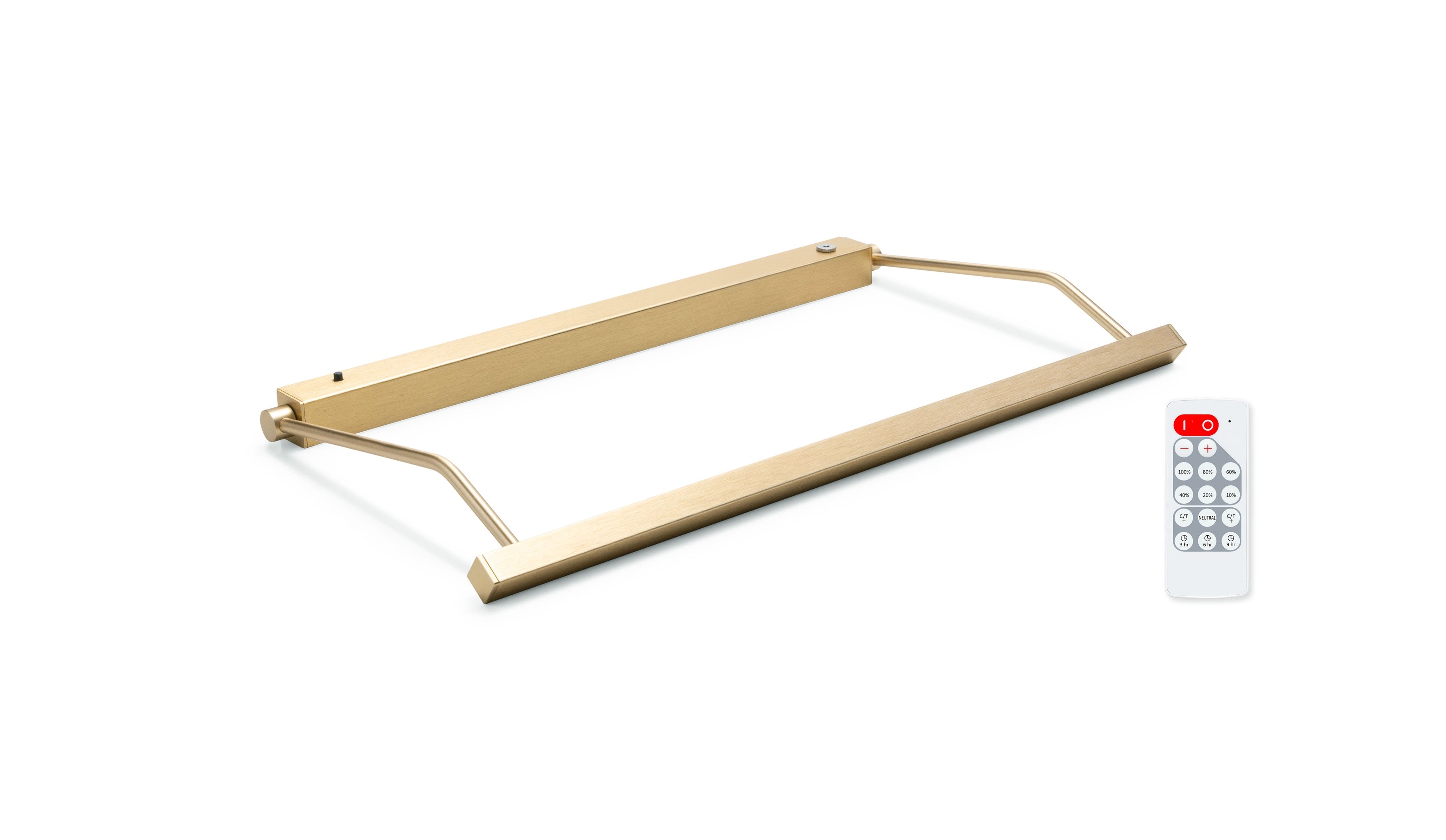
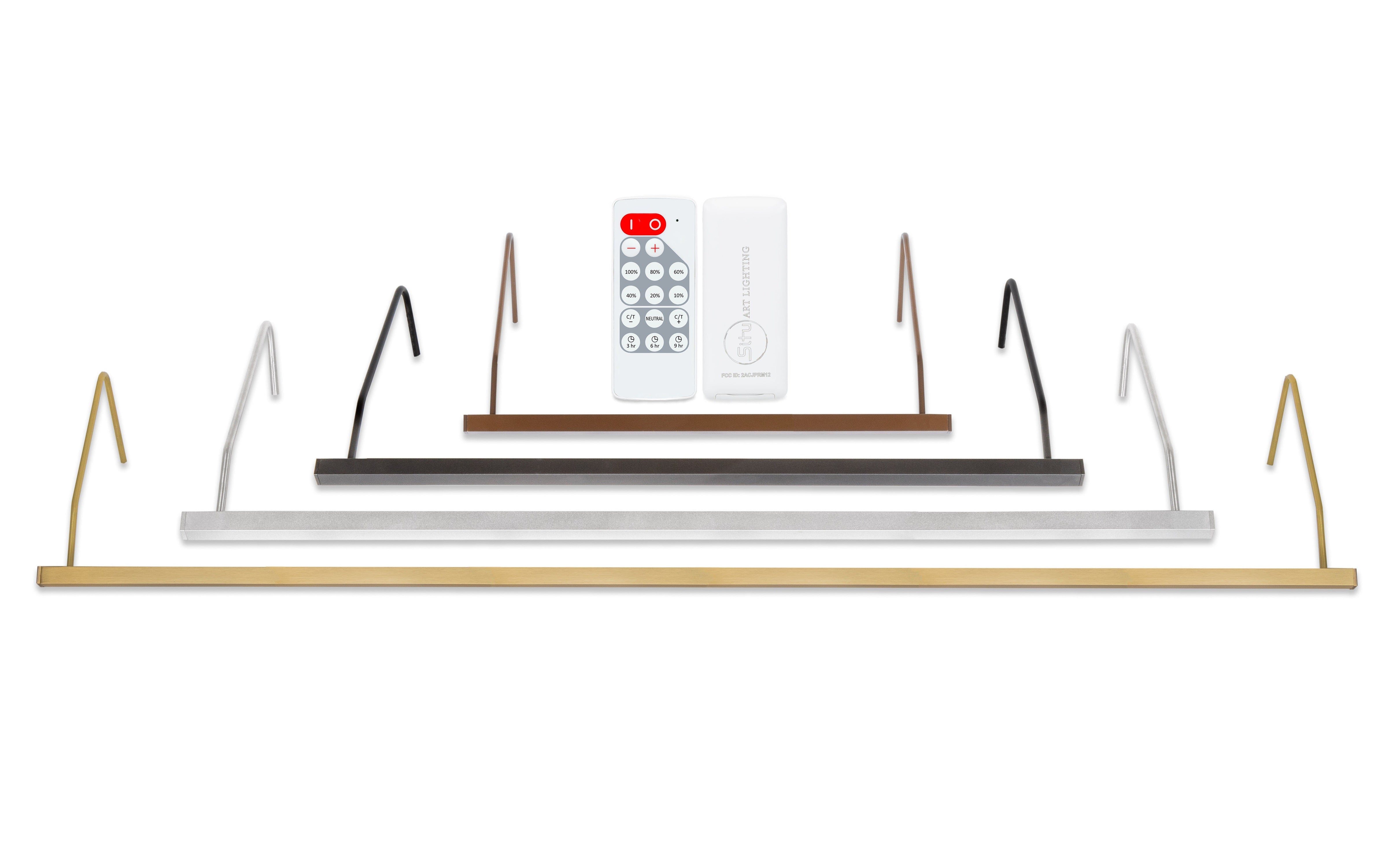
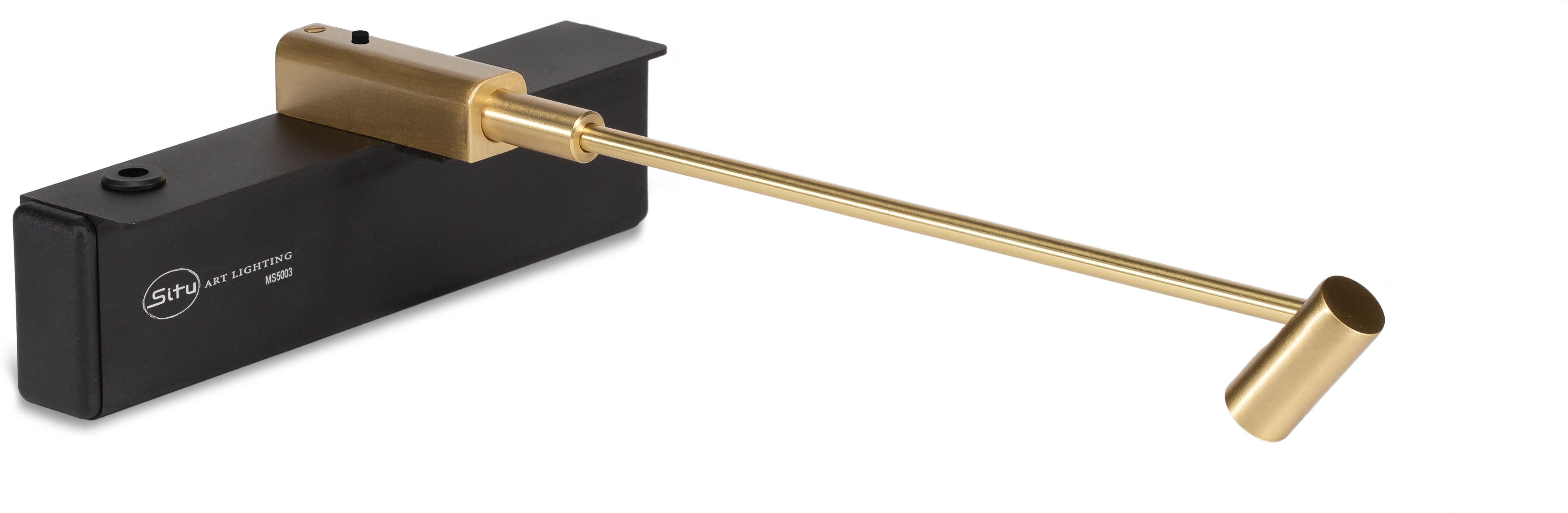
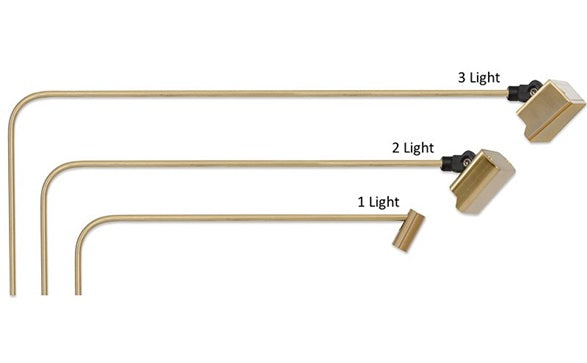
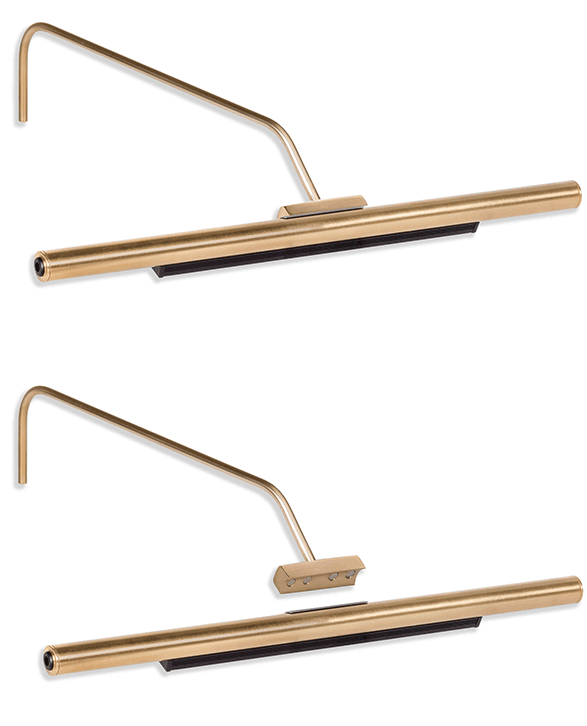
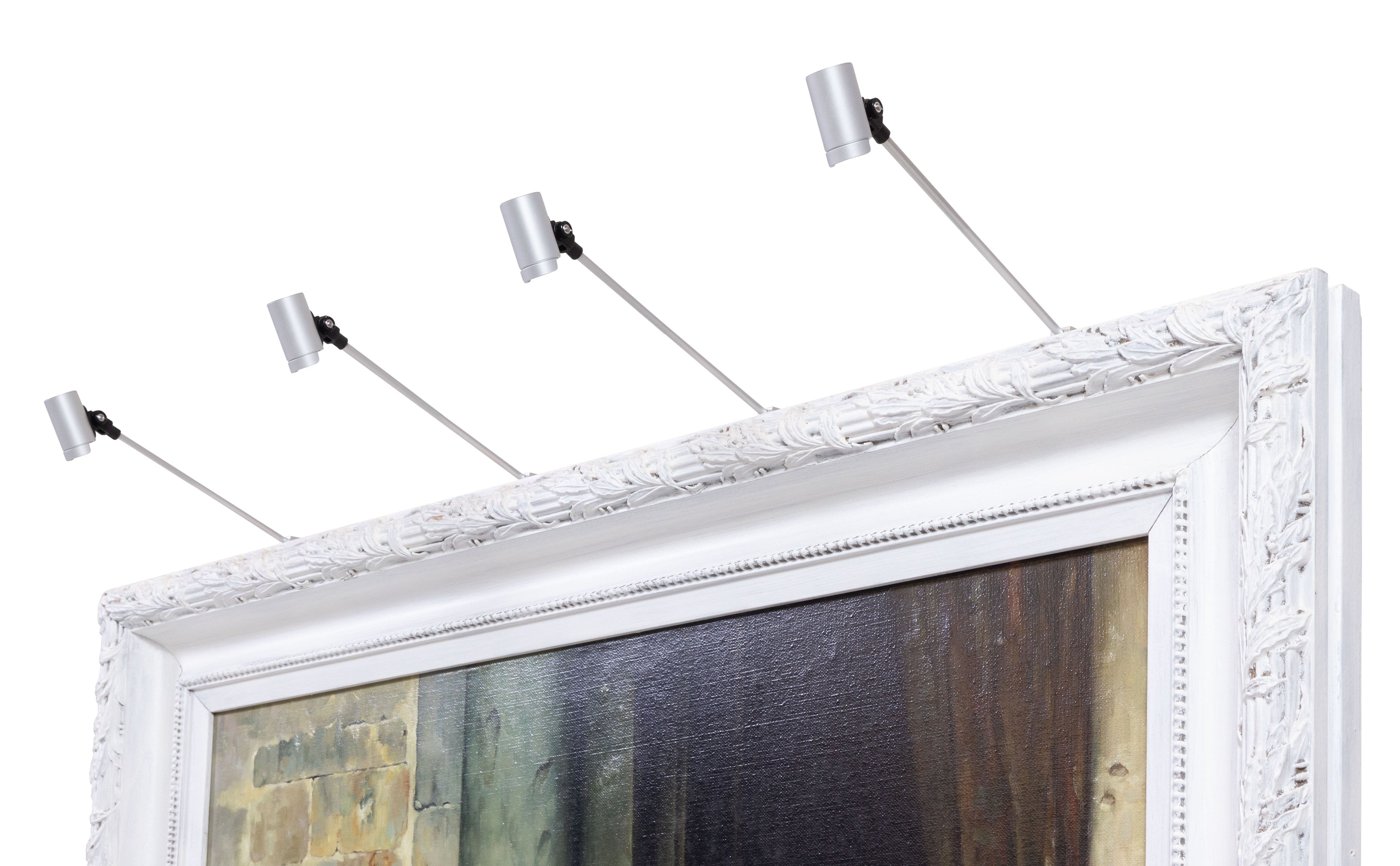
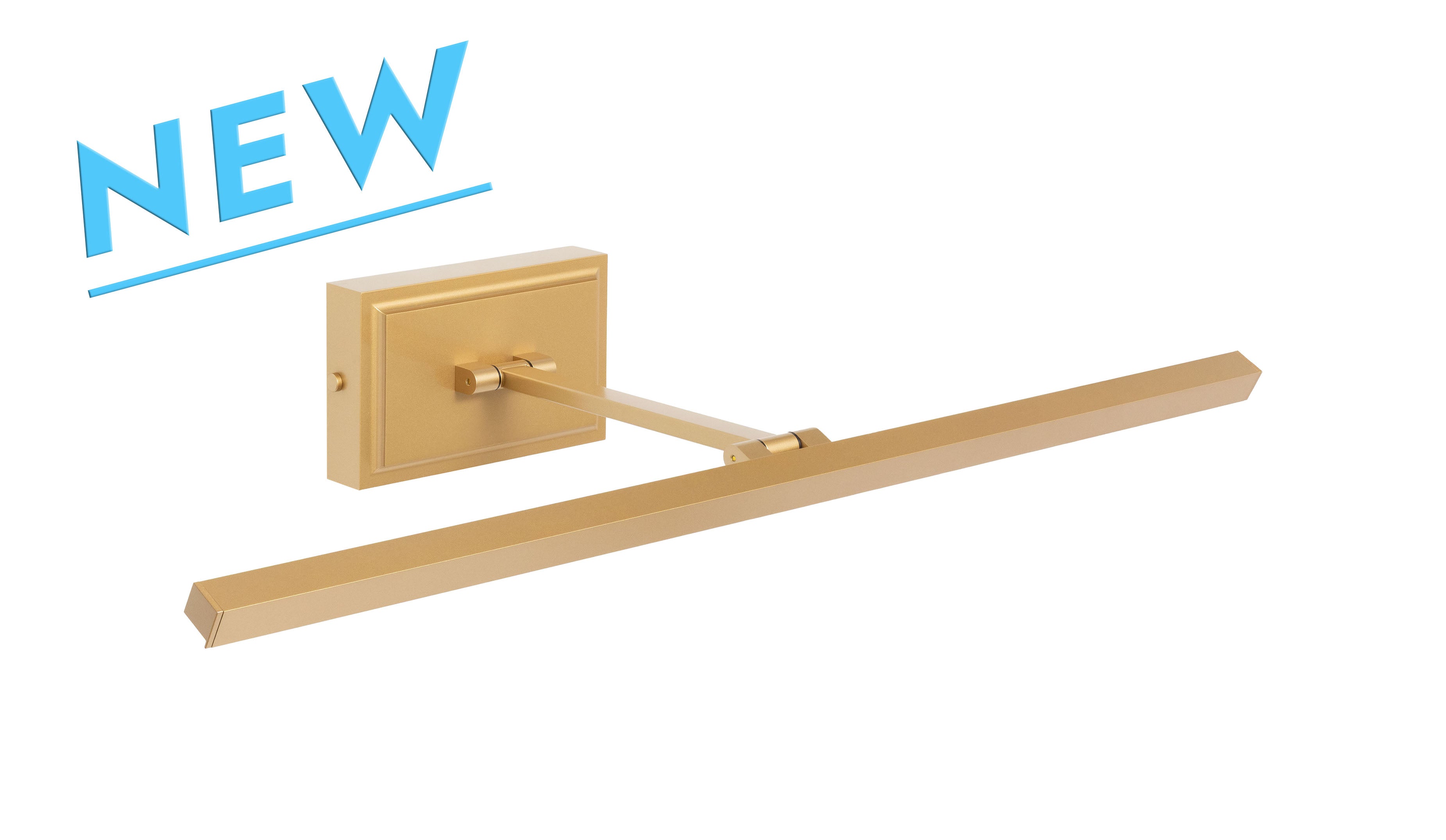
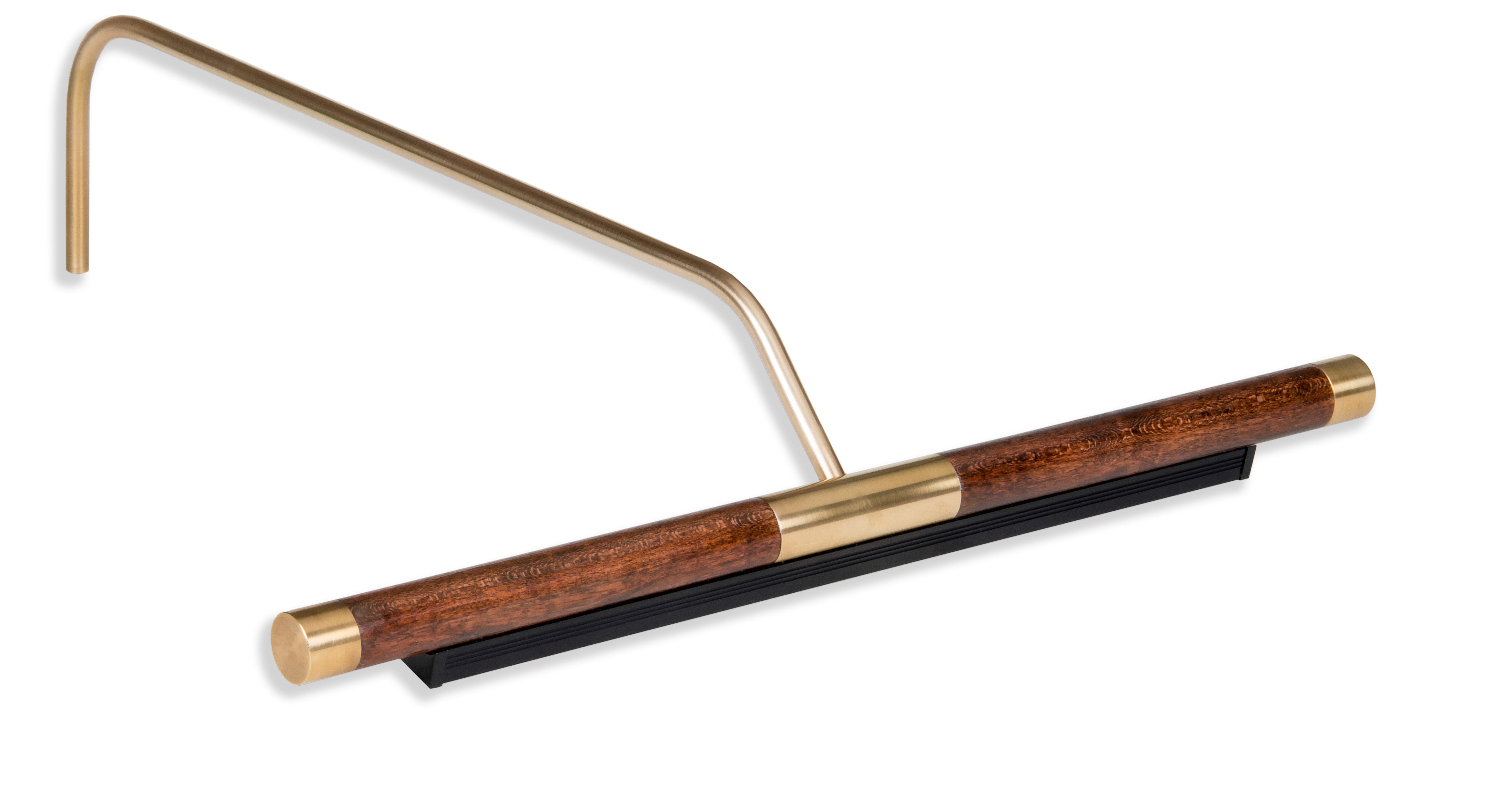
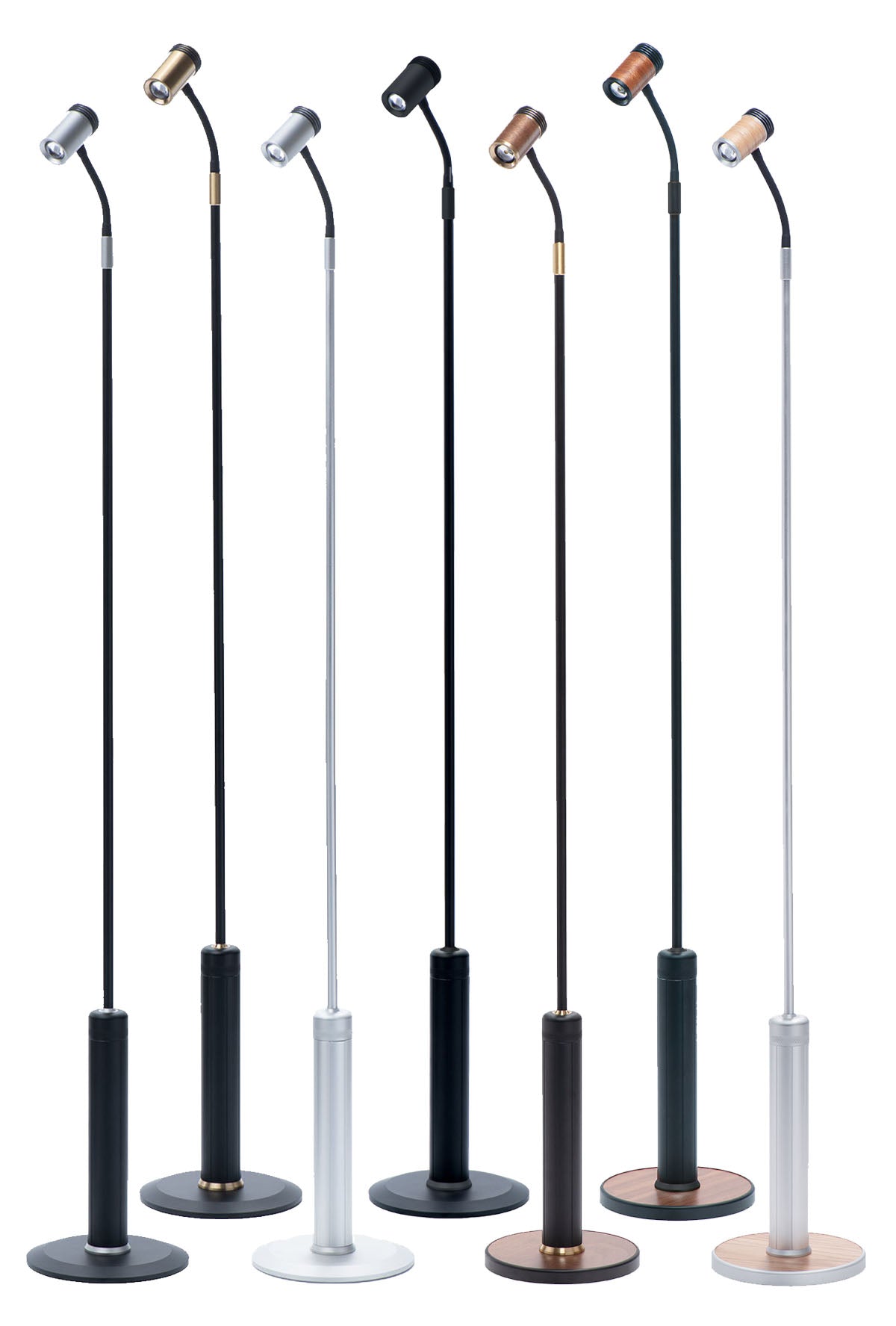
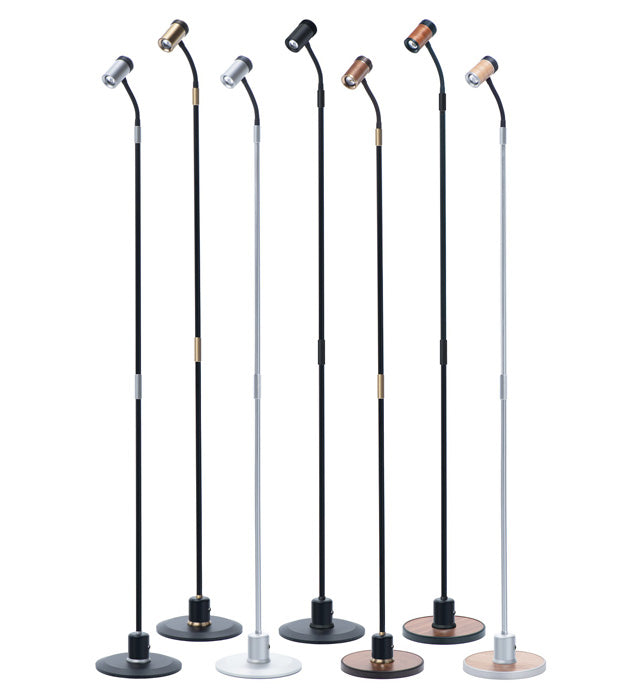
Fixture selection should follow from the artwork rather than precede it. Smaller framed pieces benefit from dedicated picture lights sized appropriately to the canvas. Smaller fixtures that emit light from a central point like our Plug-in Micro Series can illuminate the artwork without detracting from the presentation. Large-scale works, murals, and multi-panel installations require a different approach: either a longer bar, like our Plug-in Vision Series with optics capable of delivering light across the full height and width of the work, or multiple fixtures coordinated to achieve consistent coverage.
Fixture finish should support rather than compete with the interior. Matte black hardware reads as gallery-appropriate and recedes against most wall surfaces. Warm metallic finishes complement traditional millwork and warmer material palettes. The fixture itself should disappear into the result; what the guest notices is the artwork, not the hardware illuminating it.
Account for Viewing Distance in Illuminance Planning
Restaurant artwork is rarely viewed under the same conditions as gallery artwork. Guests seated at a nearby banquette may spend an entire meal within a few feet of a piece. Guests crossing the dining room may register it only briefly from across the space. Both viewing conditions need to be considered in how the piece is lit.
Artwork positioned near seating benefits from even illumination that holds up under close inspection, where surface detail, color accuracy, and the absence of glare all become more apparent. Large statement pieces in open areas can carry slightly stronger accent lighting because the greater viewing distance allows for more contrast without discomfort. The inverse square law applies here: illuminance drops off rapidly with distance, so pieces intended to read across a large dining room need meaningfully more output than pieces viewed from an adjacent table.
Why Wired LED Art Lighting Is the Right Choice for Restaurant Environments
The operational reality of a restaurant is meaningfully different from a residential or gallery setting, and those differences matter when selecting picture lighting. Rechargeable wireless fixtures are a genuinely strong solution in many contexts, but a commercial dining room is not among them. The need to remove, recharge, and reinstall fixtures across an active installation on a regular basis introduces a maintenance burden and a risk of inconsistent presentation that most operators would prefer to avoid. A fixture that is off the wall or improperly reseated during a busy service period is a problem that wiring eliminates entirely.
Wired LED art lighting offers consistent, reliable output from a permanent installation that requires no ongoing maintenance beyond the fixture itself. High-CRI LED sources built for picture lighting reproduce color with the accuracy that artwork demands, run cool enough to protect sensitive media, and deliver the spectral quality that makes the difference between artwork that reads well and artwork that simply appears illuminated. For a restaurant investing in art as part of its identity, that consistency is not a secondary consideration.
Lighting Well Is Part of the Guest Experience
A restaurant that takes its artwork seriously enough to light it well communicates something meaningful to its guests. It signals intention, care, and a standard of presentation that extends beyond the plate. Guests may not articulate what they are responding to, but the difference between a well-lit dining room and a poorly lit one is felt throughout the experience.
If you are working through these decisions for a specific space and would benefit from a specialist’s perspective, our team is here to help. Share the project with us and we’ll find the right fixture for your installation. Thousands of collectors, designers, and institutions trust us to get it right.