The relationship between art and light is one of the oldest creative partnerships in human history. Long before anyone understood the physics of color rendering or spectral output, artists and patrons were making deliberate decisions about how light should fall on a surface, what it should reveal, and what it should allow to recede. That instinct has never changed. The tools have simply gotten much better.
What follows is a look at how art lighting evolved from open flame to precision LED engineering, and why the decisions made at every stage of that history still shape the way we think about illuminating artwork today.
Early Civilizations and the First Art Displays
The earliest examples of intentional art lighting predate recorded history. Paleolithic cave painters worked by firelight, and the flickering quality of that light was almost certainly not incidental. Many archaeologists now believe the placement of torches and oil lamps within cave systems was deliberate, designed to animate the bison and aurochs carved into stone walls in ways that flat, even light never could.
In Egypt and Greece, temple and palace murals were positioned in relation to available light sources with considerable care. Roman collectors displayed bronze sculpture and painted panels in triclinia and atria where oil lamps and open courtyards created layered light environments. The goal was the same then as it is now: control the light, control the experience of the work.
Medieval Europe refined this further through architecture itself. The Gothic cathedral was, among other things, a light delivery system. Builders oriented structures to capture directional daylight through stained glass, calibrating color temperature and intensity through the composition of the glass rather than any external control. Artists designed works knowing exactly how and when light would reach them.
The Renaissance: Light as Compositional Tool
Renaissance painters did not simply work in available light. They studied it, theorized about it, and built it into the logic of their compositions. Leonardo’s notebooks contain detailed observations about how light wraps around curved surfaces, how shadows carry color, and how the angle of illumination changes the perceived volume of a subject. This wasn’t academic exercise. It was applied science in service of visual precision.
Caravaggio took this further still. His tenebrism, the radical compression of a scene into a narrow band of light against deep shadow, was as much a lighting design choice as a painterly one. He understood that how a work is lit shapes not just what is visible, but what the viewer feels. That principle remains foundational to serious art lighting practice today.
Gas Lamps, Public Museums, and the Democratization of Art Display
The nineteenth century introduced two developments that would permanently reshape art lighting: the public museum and gas illumination. For the first time, large institutions needed to illuminate significant collections for audiences who arrived at all hours, under all weather conditions. Daylight alone was no longer sufficient, and the curators and architects who designed these spaces had to think seriously about artificial light for the first time.
Gas lamps offered meaningful brightness gains over candles, but introduced serious problems. Heat and combustion byproducts posed a genuine threat to delicate pigments, varnishes, and paper. Conservators of the period documented accelerated yellowing and surface degradation in works displayed near gas fixtures. The tension between visibility and preservation, still very much present in modern practice, was first identified and debated in this era.
Electric Light and the Birth of Modern Display
The introduction of electric light in the late nineteenth and early twentieth centuries was genuinely transformative for art display. For the first time, curators had controllable, consistent illumination that did not depend on weather, time of day, or the careful management of open flame. Works could be placed anywhere in a gallery rather than positioned in relation to windows or skylights. The architecture of exhibition became far more flexible as a result.
Early incandescent bulbs were still far from ideal. They produced significant heat, emitted ultraviolet radiation, and rendered color with a warm cast that flattered some media and distorted others. But the fundamental shift they enabled, from passive to active light management, set the stage for everything that followed. Galleries and private collectors began commissioning dedicated lighting schemes for the first time, and the idea that art deserved purpose-built illumination began to take hold.
Midcentury Modernism and the Rise of Directional Lighting
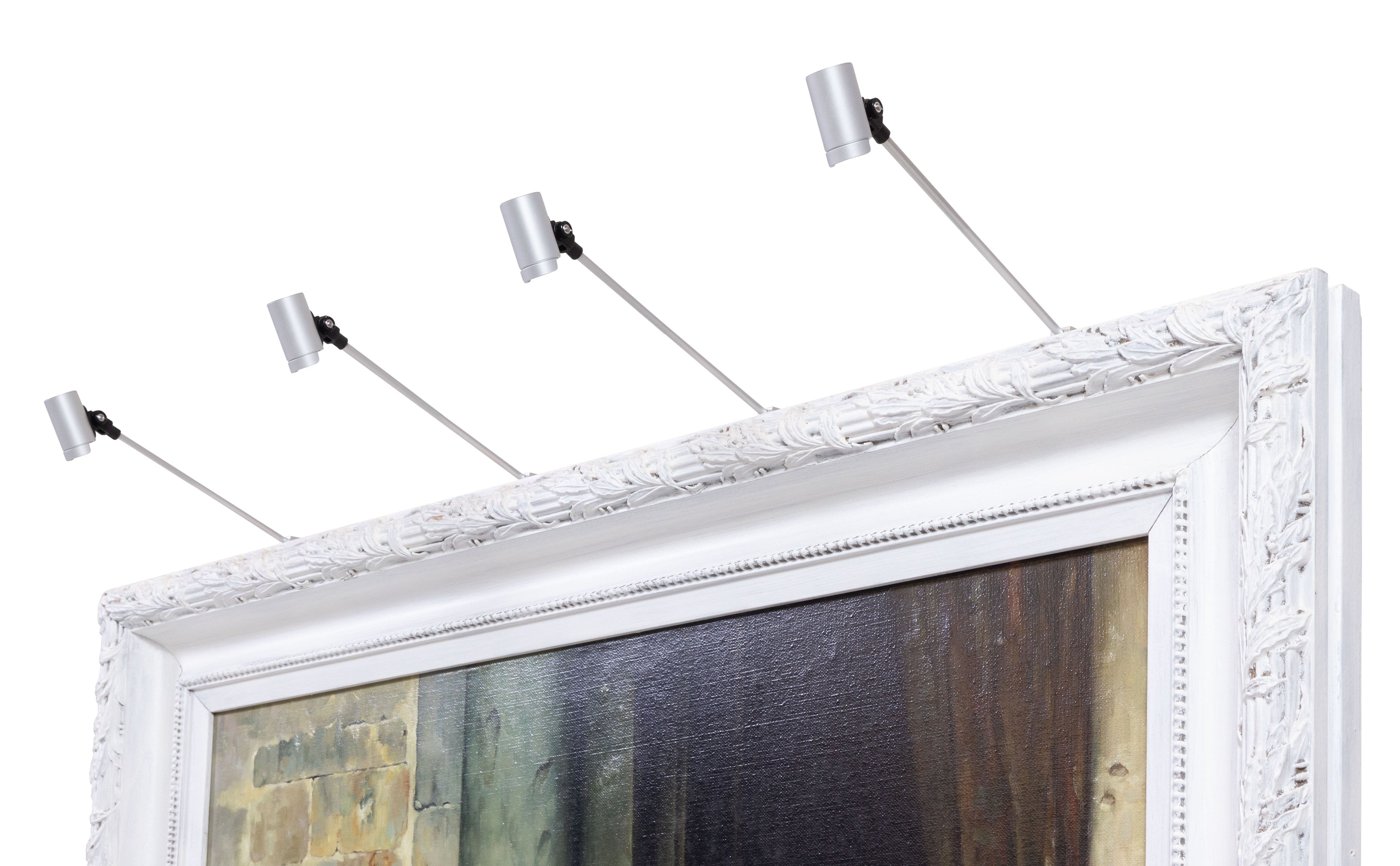
The postwar decades brought modernist interior design into direct conversation with art display. Collectors acquiring work by Abstract Expressionists, mid-century sculptors, and emerging photographers needed lighting solutions that could handle radically different media in the same space. Track lighting systems emerged as a flexible answer. Adjustable heads allowed collectors to direct light precisely, experiment with angle and intensity, and adapt as collections changed.
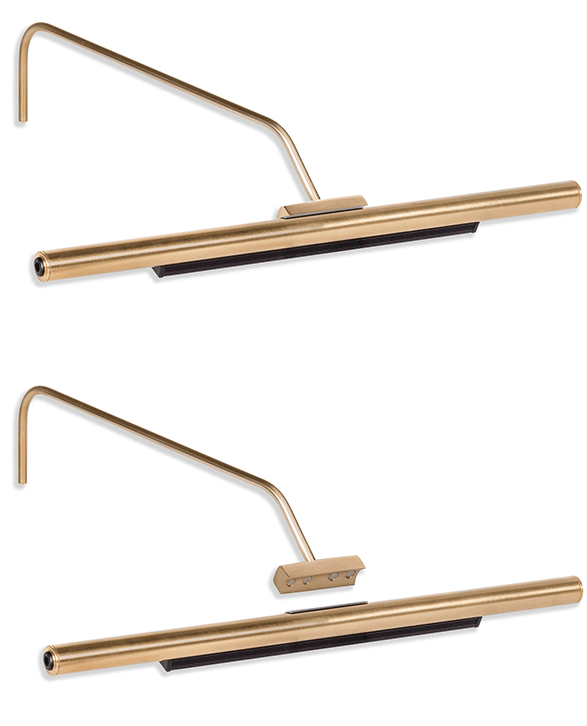
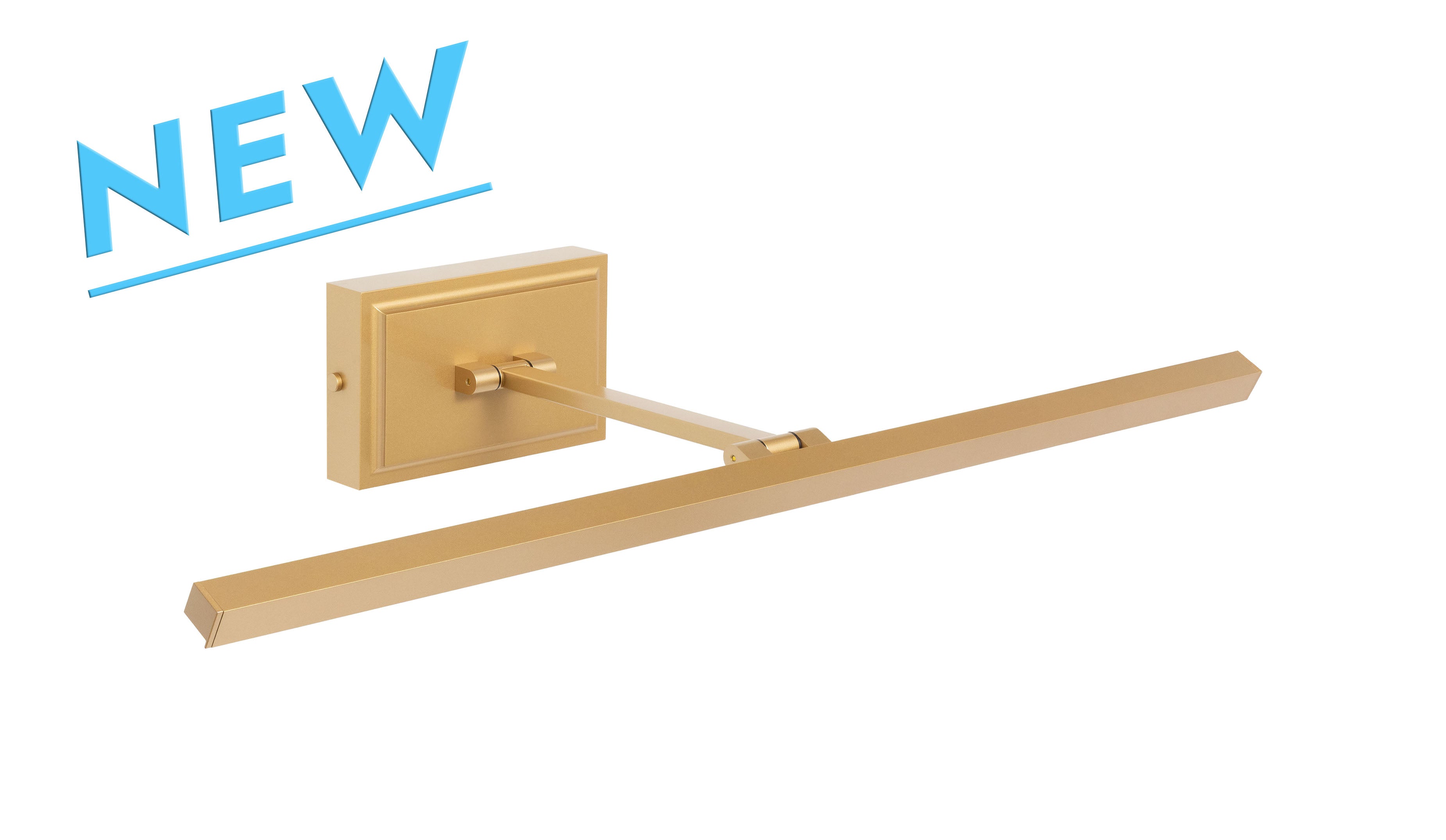
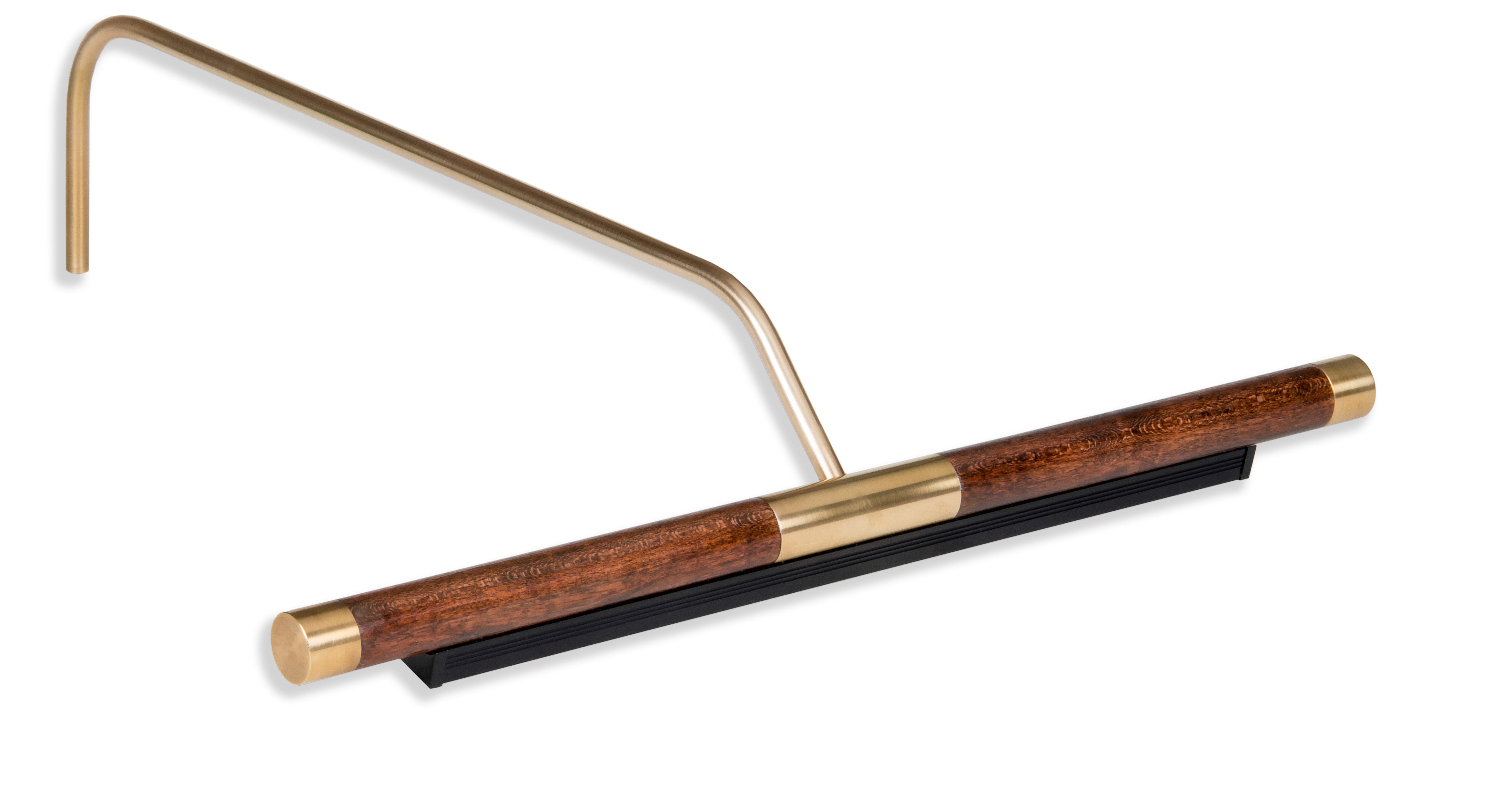
This period also marked the beginning of serious residential investment in dedicated picture lighting. Collectors began treating their homes with the same intentionality that galleries applied to their walls. The picture light, a fixture mounted directly to or above a frame and aimed at the work itself, became a fixture of serious collecting culture. Brass hardware, incandescent sources, and adjustable arms defined the category for decades.
Modern LED Art Lighting and the Precision Era
The transition to LED technology did not happen overnight, and early LED fixtures did little to inspire confidence among serious collectors. Color rendering was poor, spectral output was inconsistent, and the cool, flat quality of first-generation LED light was poorly suited to oil paintings, warm-toned photography, or richly colored textiles. For years, the art lighting category resisted LED adoption longer than almost any other segment of the lighting market.
What changed the equation was the development of high-CRI LED emitters capable of rendering color with genuine accuracy. A CRI of 93 or above, paired with a carefully selected color temperature, produces light that reveals the full depth of an oil painting, preserves the warmth of a watercolor wash, and renders the tonal range of a fine art photograph without distortion. At that level of performance, LED becomes not a compromise but a genuine advancement over incandescent sources, with the added benefits of negligible UV output, minimal heat generation, and dramatically longer service life.
Color temperature selection matters as much as CRI. Warmer sources in the 2700K to 3000K range tend to complement oil paintings, warm-toned photography, and works with significant red, gold, or earth tones. Cooler sources suit black-and-white photography, works on paper, and contemporary pieces where a neutral or slightly cool cast reads as intentional rather than clinical. The best art lighting practice involves matching the source to the work while also striking a balance with the ambient lighting in the space.
Conservation Science and the Long View
Modern conservation practice has added a rigorous scientific dimension to art lighting that previous generations could not have imagined. Museum conservators now routinely measure lux levels, UV exposure, and cumulative light dose across entire collections, working from established thresholds for different media. Watercolors, photographs, and works on paper are among the most vulnerable, with documented fading occurring at sustained light levels that would be entirely unremarkable for oil paintings or sculpture.
High-quality LED fixtures have made compliance with these thresholds considerably more practical. The near-zero UV output of a well-designed LED source eliminates one of the primary vectors for photochemical degradation. Low operating temperatures reduce the secondary damage caused by heat cycling in materials like canvas, panel, and varnish. For private collectors housing significant works, these are not abstract concerns. They are reasons to take art lighting seriously as a preservation decision, not merely an aesthetic one.
Where Art Lighting Stands Today
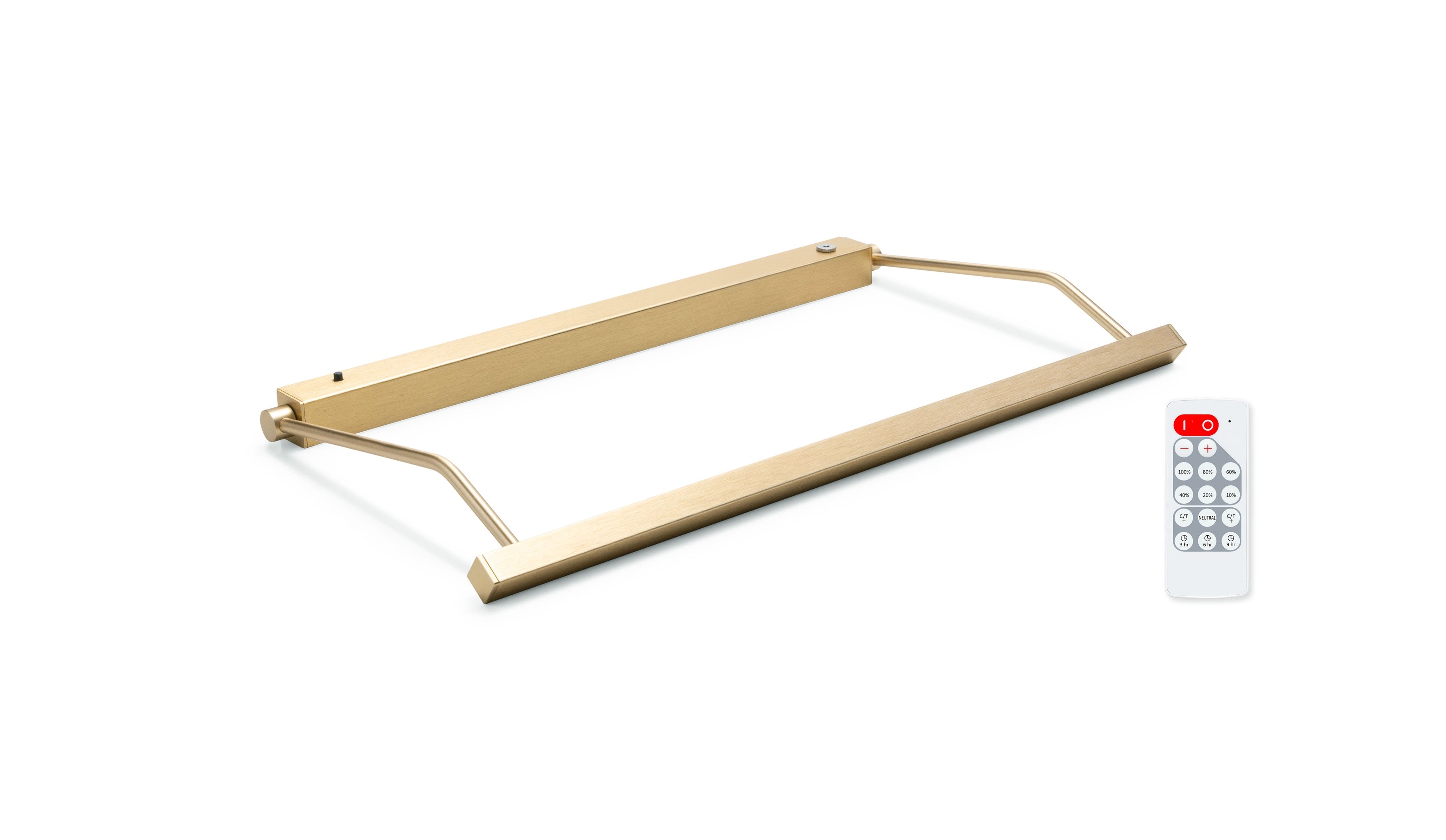
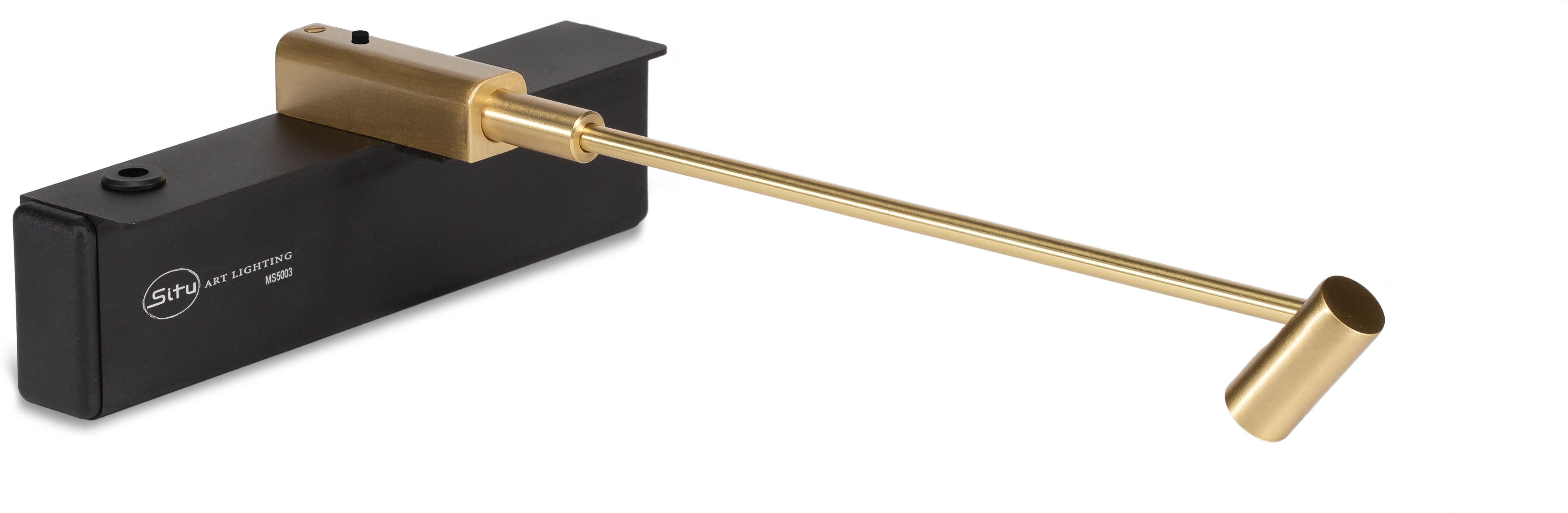
The current state of the art lighting category is, by any historical measure, remarkable. Fixtures that would have required professional installation a decade ago are now available in wireless configurations that mount without tools and remove for recharging with a single hand. Performance that once required expensive custom specification is now accessible to private collectors at a range of price points. And the knowledge base required to make genuinely informed decisions, about CRI, color temperature, beam angle, fixture placement, and conservation impact, is more widely available than it has ever been.
What has not changed is the fundamental challenge: light is interpretive. The same work can read as vibrant or flat, warm or cold, intimate or institutional depending entirely on the quality and placement of the source illuminating it. That is why the best art lighting decisions are never purely technical. They require an understanding of the work, the space, and the experience the collector is trying to create. The history of art lighting is ultimately a history of that pursuit, and it is far from finished.
Thousands of collectors, designers, and institutions have trusted us to help them get it right. If you’re ready to take the lighting of your collection seriously, our specialists are here to help you find the right art lighting solution for your specific work and space.