Hardwired picture lights offer something wireless and plug-in fixtures cannot, including seamless integration with wall dimmers, lighting control systems, and smart home platforms. That integration gives you meaningful flexibility over how and when artwork is illuminated, and how that illumination fits into the broader lighting environment of the space. The key is knowing which control protocol your space supports and selecting a compatible fixture accordingly.
Understanding Dimmer Compatibility
Incandescent sources dimmed predictably. Reduce the voltage, reduce the output. LED fixtures work through a driver, the electronic component that converts incoming power to the form the LEDs require. The driver is what determines how a fixture responds to a dimming signal.
The good news is that quality modern LED drivers and current generation dimmers typically handle this well. The selection process is straightforward, so confirm which control protocol your space requires. The sections below explain the two main protocols and what each one enables.
TRIAC Dimming: The Most Common Residential Protocol
TRIAC dimming is the most widely deployed control protocol in residential settings, and for a straightforward reason: most homes are already wired for it. Standard two-wire dimmer circuits are the norm in residential construction, and virtually every wall dimmer available at retail operates on TRIAC principles. No additional wiring is required, which is why TRIAC compatibility is typically the first specification worth confirming for any hardwired picture light installation.
TRIAC dimmers come in two forms: forward phase and reverse phase. Forward phase dimmers, sometimes called leading edge, switch the waveform on at the beginning of each half-cycle. Reverse phase dimmers, sometimes called trailing edge, switch it off at the end. Our drivers are designed to accommodate both forward and reverse phase, so customers do not need to navigate that distinction when selecting a wall control. For those who want a tested starting point, we recommend the Leviton TSL06 for TRIAC installations. Many other dimmers are compatible, but the TSL06 is one we have tested and can stand behind.
Minimum load requirements are worth understanding as background, though they are generally not a concern with our fixtures and drivers. Older dimmers were designed for incandescent loads that consumed considerably more power, and some legacy hardware can struggle with the smaller electrical loads that LED fixtures place on a circuit. This is more commonly an issue with lower-quality or unvetted products.
0-10V Dimming: The Professional Standard
0-10V dimming uses a separate low-voltage control signal that ranges from 0 to 10 volts DC, to communicate the desired output level to the driver. The driver adjusts power to the LEDs accordingly. Separating the control signal from the power circuit produces smooth, linear dimming across a wide range and eliminates many of the compatibility issues associated with early TRIAC based approaches.
0-10V is common in commercial and institutional lighting but less so in residential installations. That last point matters: 0-10V requires an additional pair of low-voltage control wires alongside the power circuit, which is not standard in most residential construction. If your space has not been wired for it, TRIAC is a fully capable alternative and you are not leaving meaningful performance on the table. At 10V the fixture operates at full output. At 0V most drivers drop to a low but non-zero level, with true off requiring a separate switched circuit. It is also worth noting that the performance gap between TRIAC and 0-10V has narrowed considerably with modern drivers. Earlier generations showed more significant differences in dimming range and smoothness. With the drivers we use, the practical difference in day-to-day performance is negligible for most applications. For 0-10V installations, we recommend the Leviton IP710.
Smart Home Integration
Wall dimmer compatibility is one dimension of what hardwire installation enables. The same driver protocols that support wall dimmers also connect to lighting control and smart home platforms, opening capabilities that fixed-output fixtures cannot offer.
TRIAC compatible smart dimmers from platforms including Lutron Caseta, Leviton Decora Smart, and others allow picture lighting to be controlled remotely, scheduled, and integrated into scenes alongside other fixtures in the space. A scene that dims the room for evening viewing, brings the picture lights to a calibrated level, and adjusts other sources simultaneously is achievable through most major smart home platforms when the fixtures support the required protocol.
Lutron RadioRA 3 supports both TRIAC and 0-10V drivers, which means picture lights using either protocol can integrate into that system. The same applies to other professional control platforms that accommodate multiple dimming protocols. Whether your installation uses TRIAC or 0-10V, the picture lighting can participate fully in a whole-home system.
The Direct Connect Vision Series and Hardwire Vision Series
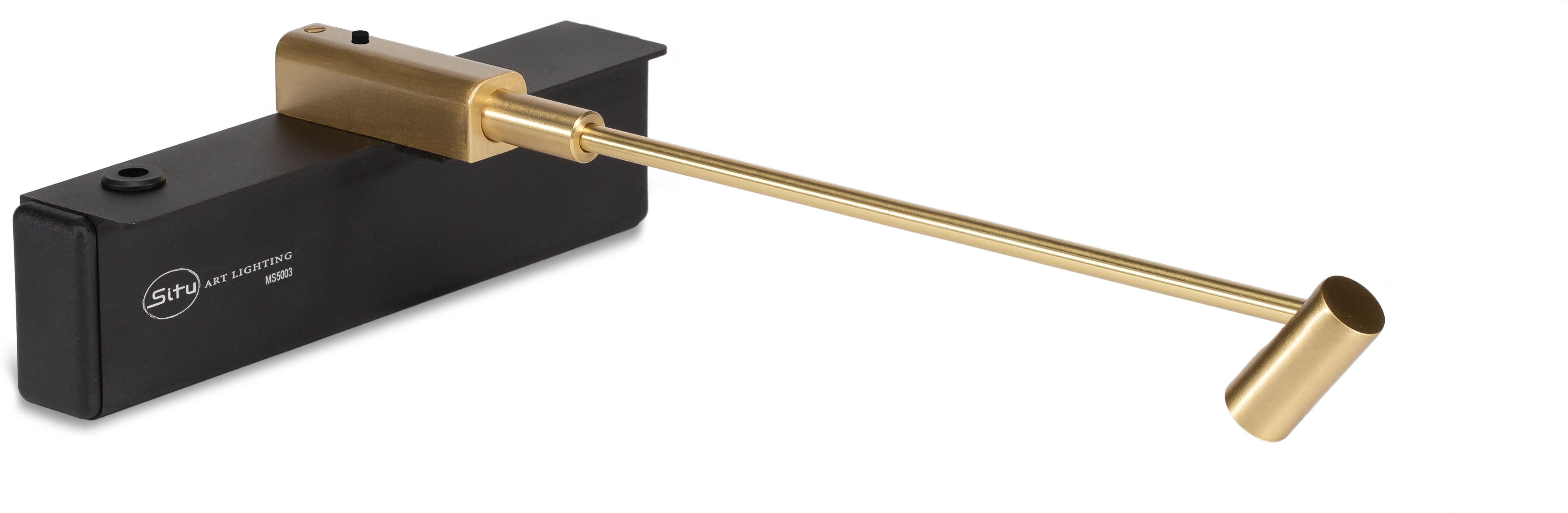
Two product lines in our hardwire collection are engineered for integration with wall dimmers and control systems. The Direct Connect Vision Series mounts directly over a 3.5 or 4 inch junction box, with no exposed wiring or visible mounting hardware. The fixture connects at the wall, the artwork hangs below it, and the result is a clean, architecturally resolved presentation that keeps focus on the artwork.
The Hardwire Vision Series uses an external driver housed in a 4-gang electrical box positioned behind the artwork. It offers the same optical performance as the Direct Connect Vision Series but in a configuration suited to spaces where direct junction box mounting is not practical or preferred.
Both series support TRIAC and 0-10V control environments through their drivers. Per the discussion earlier in this article, neither protocol is inherently superior for these fixtures in practice. The right choice depends on how your space is wired and what control system you are integrating with. If smart home or lighting control integration is part of the project, confirming driver protocol compatibility with the integrator early in the process avoids unnecessary adjustments later.
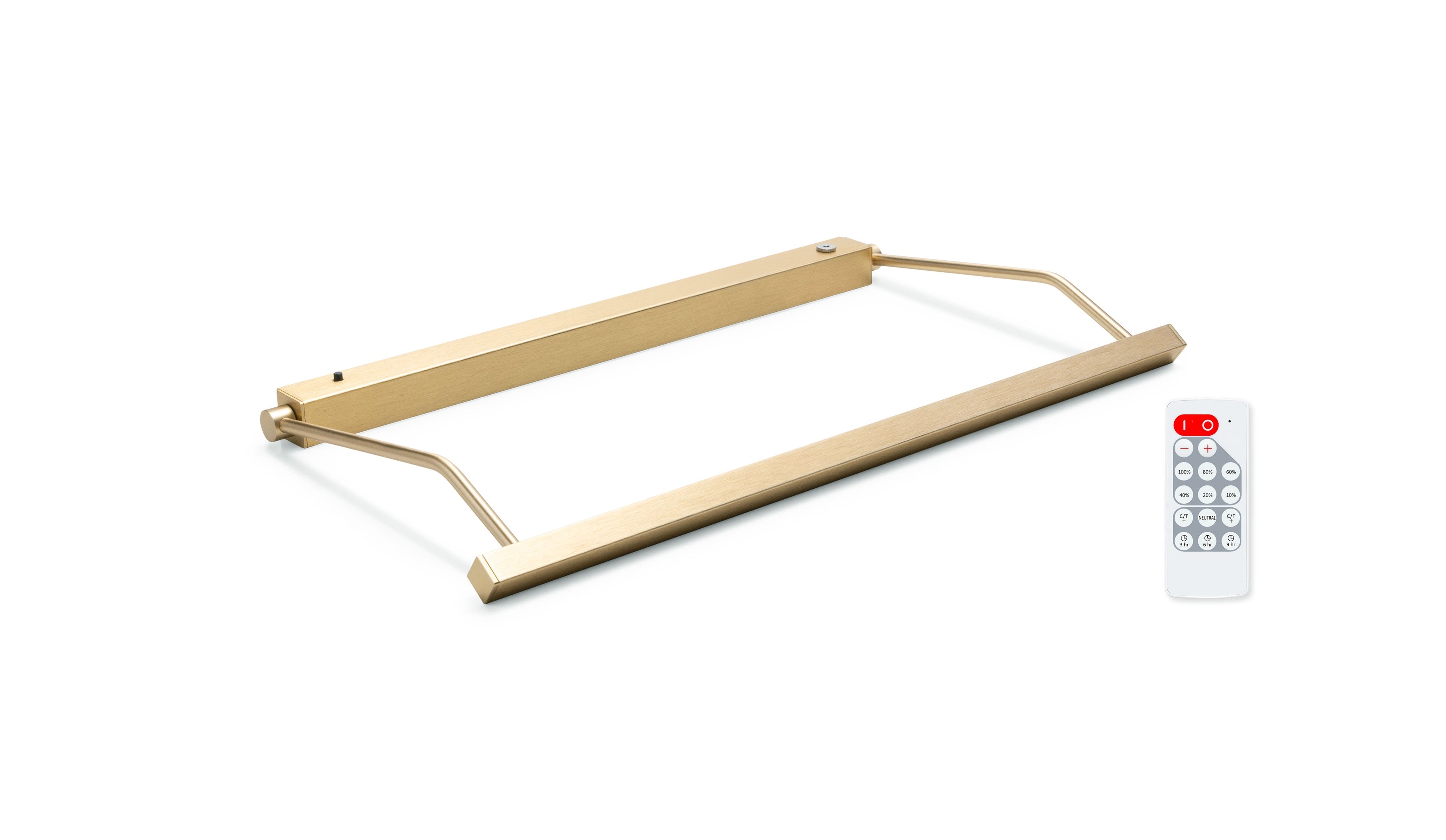
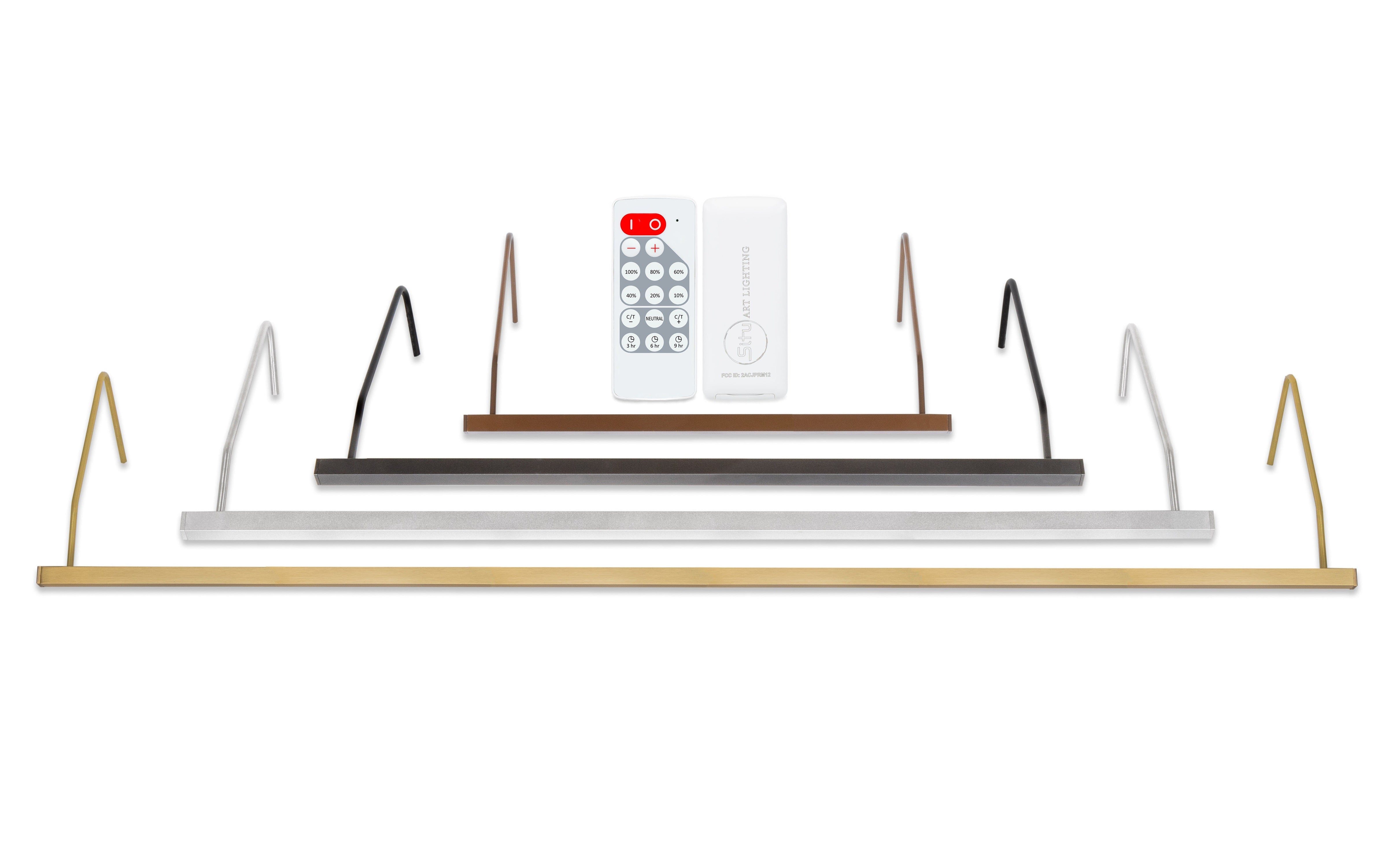
Both of these systems are also available with remote control operation if preferred to the external dimmers discussed throughout this article.
Why Dimming Matters for Artwork Specifically
A fixture running at a fixed level cannot adapt to the room around it. Afternoon viewing in a bright room calls for different output than an evening gathering with ambient light dimmed low. Dimming lets the picture light respond to those conditions rather than forcing the rest of the room to accommodate a single fixed level. The result feels integrated in a way that fixed output installations rarely achieve.
Why Hardwire
Plug-in picture lights are an excellent solution for many installations, and wireless fixtures offer genuine flexibility for collections that rotate or where power is unavailable. The case for hardwire comes down to one thing: control. A hardwired fixture connects directly to your home's electrical system, which means it can dim via a wall dimmer, a lighting control system, or a full smart home platform. None of that is possible with a battery-powered or plug-in fixture.
If you want to dim your picture lighting from a wall dimmer, include it in an evening scene that also adjusts your overhead fixtures, or control it through a Lutron or similar system, hardwire is the path that makes it possible. It is not about the fixture itself. It is about what the installation allows.
If you are selecting hardwired picture lights and would benefit from guidance on dimmer compatibility for LED picture lights, control protocol, or smart home integration, our team is here to help. Explore our hardwired picture lights or speak with our specialists to find the right fixture and control combination for your installation. Thousands of collectors, designers, and institutions trust us to get it right.