Many collected works require glazing. Works on paper, watercolors, photography, and prints are genuinely vulnerable to dust, handling, and UV exposure, and a frame with glass provides real protective value for these media. Oil paintings, pastels on board, and other more robust works often do not require it at all. The problem glazing creates regardless of medium is the same: glass turns a passive surface into a reflective one, and every light source in the room becomes a potential contributor to glare.
Understanding why glare occurs makes it considerably easier to address. This guide covers the physics, the practical remedies, and the honest limitations of the solutions most commonly marketed as fixes.
Why Glass Creates Reflections in the First Place
Glare is a reflection, nothing more. The angle at which light strikes a reflective surface is exactly the angle at which it reflects away from it. This is the Law of Reflection, and it governs every glare problem in every installation. Understanding it is the prerequisite to solving glare, because it tells you immediately that the only way to eliminate a specific reflection is to change the angle at which light reaches the glass, change where the viewer is positioned relative to that reflection, or eliminate the reflective surface. We have a separate article on this that can be viewed here: click here.
Every light source in a room contributes its own reflection geometry. Ceiling fixtures, windows, table lamps, sconces, and the picture light itself all produce reflections on glass at predictable angles. When a picture light is mounted above the artwork and directed downward, the reflected light bounces away at the same angle it arrived. Whether that reflection reaches the viewer's eye depends on where they are standing and where the light is positioned relative to the glass plane. This is why glare problems vary from room to room and from viewer position to viewer position, and why a single adjustment that eliminates a reflection from one seat may not fully resolve it from another.
Why Ceiling Fixtures Are the Worst Source for Glazed Work
The position of a light source relative to the artwork determines the angle at which light strikes the glass, and that angle determines where the reflection goes. A ceiling fixture positioned directly above glazed artwork sends light nearly parallel to the glass surface, directing the reflection downward and away from the viewer. That geometry is favorable for glare control. The problem arises when ceiling fixtures are offset horizontally from the artwork, which is the typical condition in most rooms. The further a light source is displaced horizontally from the piece, the more perpendicular its light becomes to the glass surface, and the more directly the resulting reflection exits toward the viewer's eye level. A ceiling fixture across the room from a framed work can function as a near-perfect mirror when the geometry aligns.
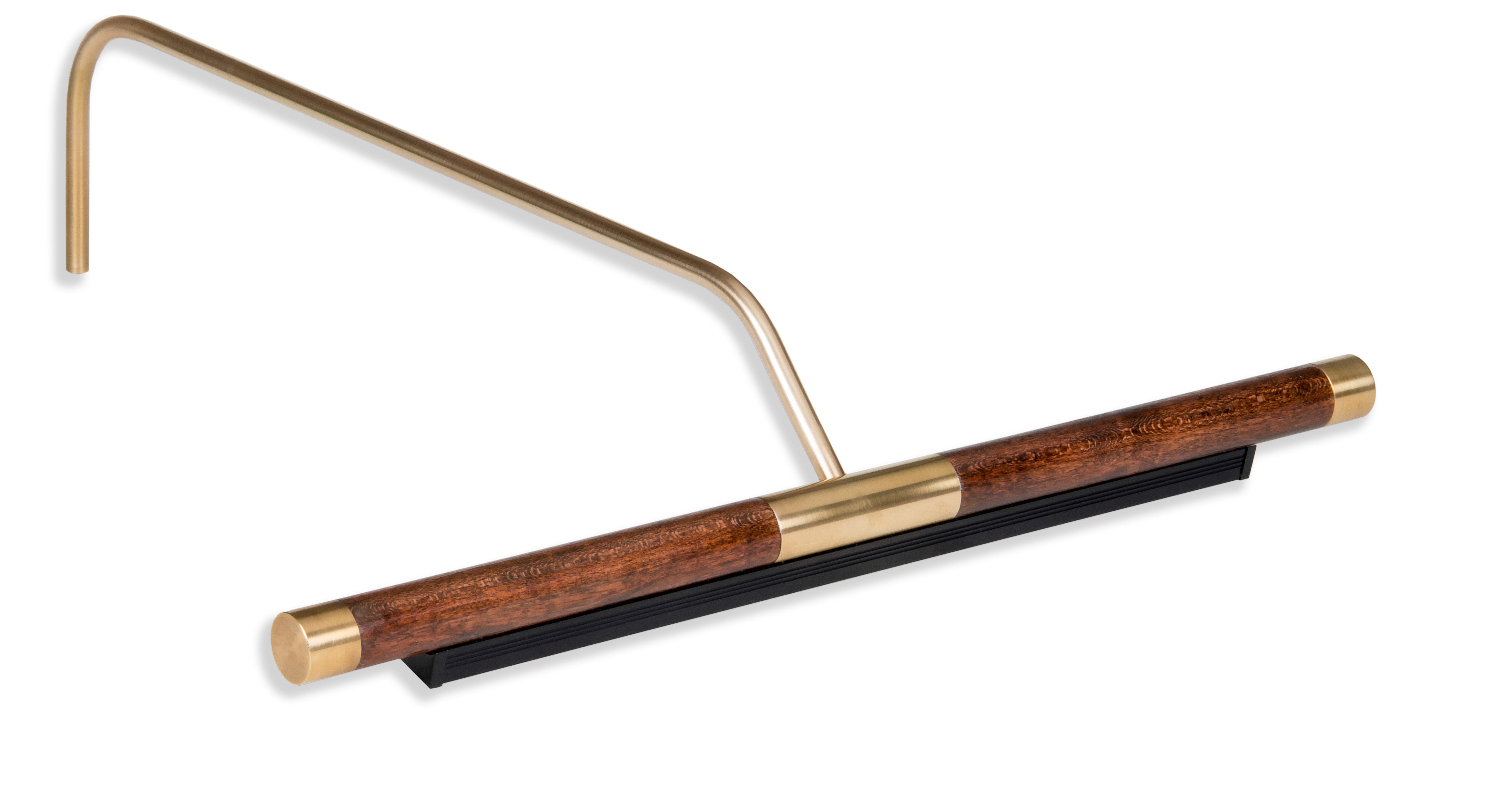
Dedicated picture lights have a structural advantage in this regard. Mounted directly above the frame, they replicate the favorable geometry of the overhead fixture without depending on room layout to achieve it. Light travels nearly parallel to the glass surface and the reflection exits downward, often below the viewer's line of sight. That position is fixed by the fixture's mounting rather than left to chance. A ceiling fixture could achieve the same geometry if it happened to be positioned directly above the artwork, but rooms are rarely designed that way and ceiling fixtures cannot be aimed with the precision a dedicated picture light provides.
Adjusting Fixture Height
Raising the fixture higher above the artwork changes the angle of incidence in a way that pushes the reflection further below the viewer's eye level. When a picture light is mounted at or just above the top of the frame, the angle is relatively steep and the reflection exits the glass at a point that may still intersect with the viewer's line of sight depending on viewing distance and the height of the artwork on the wall. Moving the fixture higher makes the angle of incidence more oblique, which sends the reflection lower. In many installations this is the single most effective adjustment available, and it requires no new hardware.
Shortening the Fixture Arm
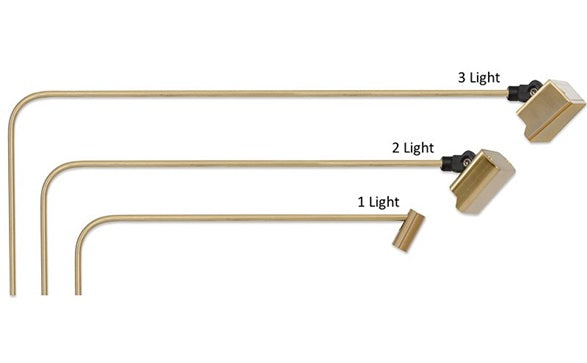
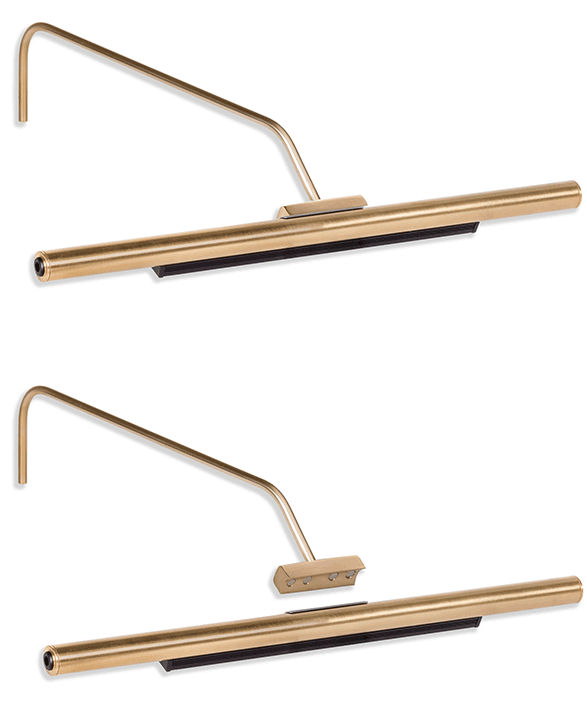
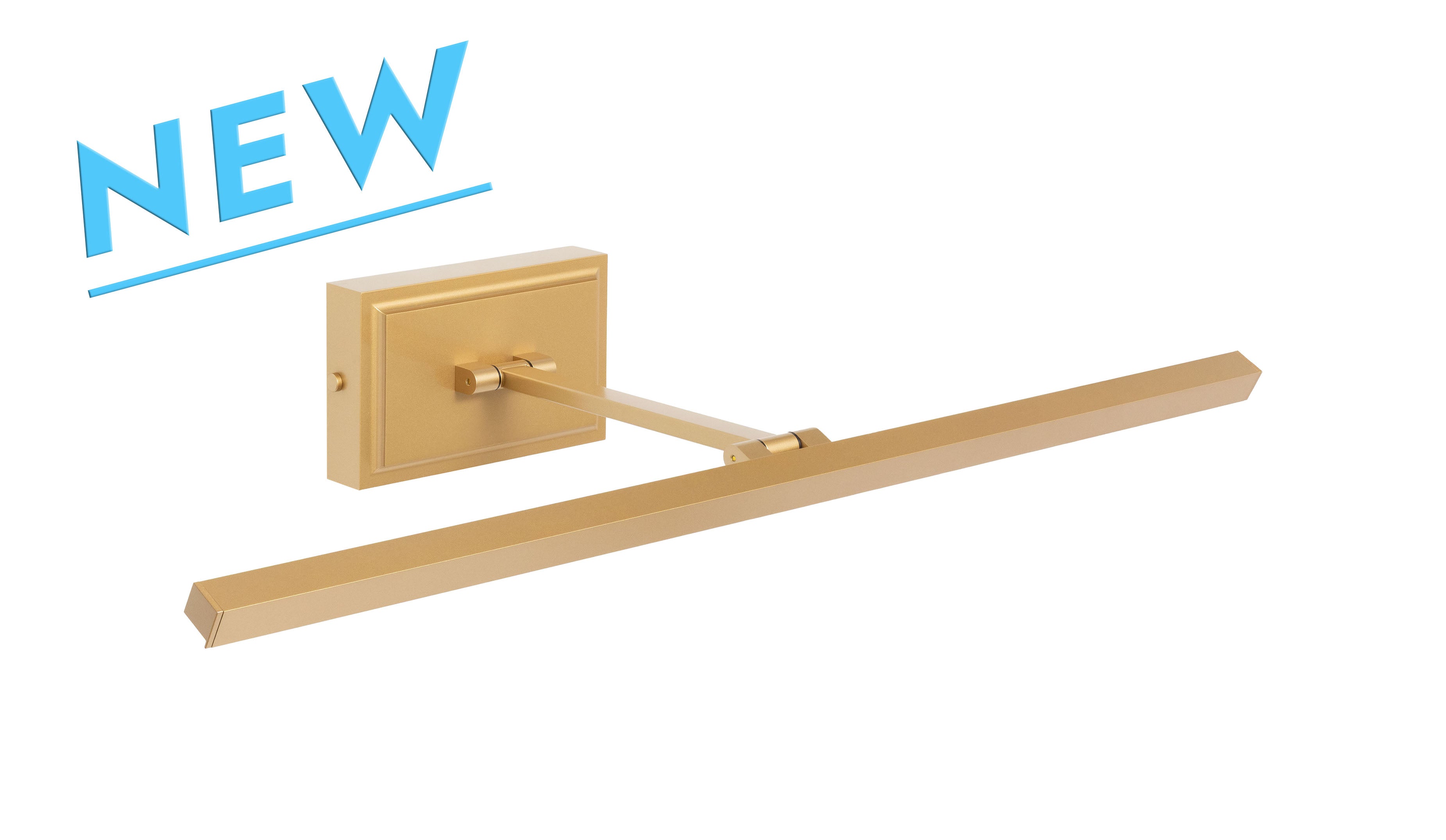
A shorter arm brings the light source closer to the wall, which also changes the angle at which light strikes the glass and can redirect the reflection below eye level. This adjustment trades some lateral coverage for improved glare control, which is a reasonable tradeoff on narrower works where full-width coverage from a longer arm is not required. On wide-format work where coverage is already a constraint, shortening the arm may not be practical. Many picture lights are available in shorter arm configurations for exactly this reason, and it is worth considering during specification rather than as a retrofit.
Adjusting Artwork Placement
The position of the artwork on the wall affects where the reflection from the picture light exits the glass plane relative to the viewer. Artwork hung high relative to eye level produces a steeper angle of incidence from the fixture above it, which tends to bounce reflections directly toward the viewer. Bringing the artwork lower, closer to eye level, reduces this angle and can make a meaningful difference in reflection geometry. This is a particularly practical adjustment when other changes are not possible or have not fully resolved the problem.
Uplighting as an Alternative Approach
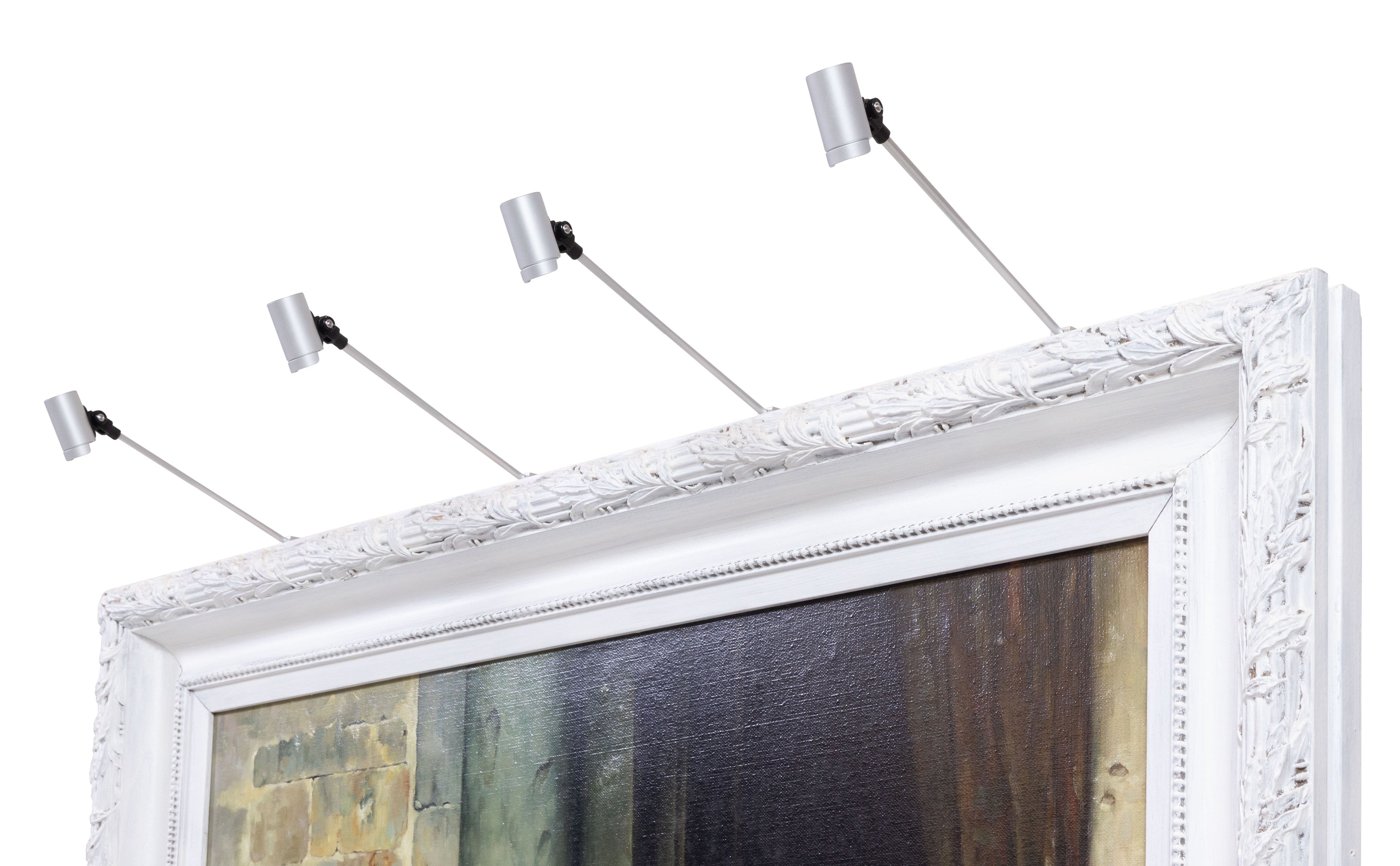
Positioning the fixture below the artwork and directing light upward eliminates the primary glare geometry entirely. A light cast upward reflects away from the viewer's eye level rather than toward it, which is why uplighting is one of the most effective remedies for persistent glare on glazed work that cannot be resolved through fixture height or arm length adjustments. The tradeoff is a different quality of illumination: uplighting emphasizes the foreground of the image and creates a slightly different reading of tonal depth than downlighting. Whether that reading suits the work is a judgment call, but for collectors dealing with genuinely intractable glare, it is a legitimate and often effective solution.
Manage the Ambient Light Environment
The picture light is not the only source of glare in most rooms. Windows, recessed ceiling fixtures, and floor lamps all contribute reflections to glazed artwork from their own angles. Before concluding that the picture light is the problem, it is worth identifying the full set of sources visible in the glass from the primary viewing position. Sometimes the most problematic reflection comes from a ceiling fixture elsewhere in the room rather than from the dedicated picture light, and adjusting or eliminating that source produces a larger improvement than any change to the picture light position.
Brightness is not a substitute for correct placement. Increasing output amplifies every reflection already present on the glass rather than overpowering them. Position and angle should be resolved before output level is considered.
What Museum Glass Actually Does and Does Not Do
Anti-reflective glazing, sold under various names including museum glass, is designed to scatter and diffuse incoming light rather than reflect it specularly. The coatings applied to the glass surface are most effective against ambient light arriving from oblique angles and multiple directions simultaneously. For that specific use case, good anti-reflective glazing is genuinely useful and reduces the kind of background reflections that can appear even without a dedicated picture light in the room.
Against a dedicated picture light, its effectiveness is considerably more limited. A picture light projects a strong, directional source at the glass surface from a relatively close distance and at a specific angle. The intensity and directionality of that source tends to overpower the anti-reflective coating's scattering effect, and meaningful reflections can persist even through high-quality anti-reflective glazing. Additionally, most anti-reflective materials introduce a slight haze that softens the visual acuity of the artwork behind them. Many collectors who invest in premium glazing hoping to eliminate glare find that the lighting placement issues remain and that the glass itself has reduced the clarity of the piece. Resolving the lighting geometry is the more effective and more reversible solution.
When Removing the Glass Is the Right Answer
Removing the glass is worth considering more seriously than most collectors initially assume. For oil paintings and other works that do not require glazing for conservation, glass adds an optical layer without providing meaningful preservation benefit. An unglazed oil painting eliminates the glare problem entirely and allows the surface texture and color of the work to be seen without interference. Whether removing the glass is appropriate depends on the specific medium, the condition of the work, and the display environment. For many traditional oil paintings in private residential settings, it is a reasonable and often preferable option.
Works on paper, watercolors, photography, and prints benefit from glazing and should generally remain protected. For these, the approaches above, fixture height, arm length, artwork placement, uplighting, and ambient light management are the tools available. Combining them thoughtfully, rather than relying on any single adjustment, typically produces the most resolved result.
Light Quality Still Matters
Glare control is one dimension of picture lighting for glazed work. Color rendering and output quality are equally important and equally affected by the glass. Anti-reflective coatings and standard glass both absorb a small percentage of transmitted light and can subtly affect color rendering for sources with lower CRI. A high-CRI source delivers enough spectral fidelity that this absorption is less consequential. Selecting a quality plug-in art light resolves both the glare geometry and the color rendering considerations together, which is why fixture selection and placement should always be addressed as a system rather than as separate decisions.
If you are working through these decisions for a specific piece and would benefit from a specialist's perspective, our team is here to help. Share the work, the space, and the glazing situation with us and we will identify the right approach. Thousands of collectors, designers, and institutions trust us to get it right.