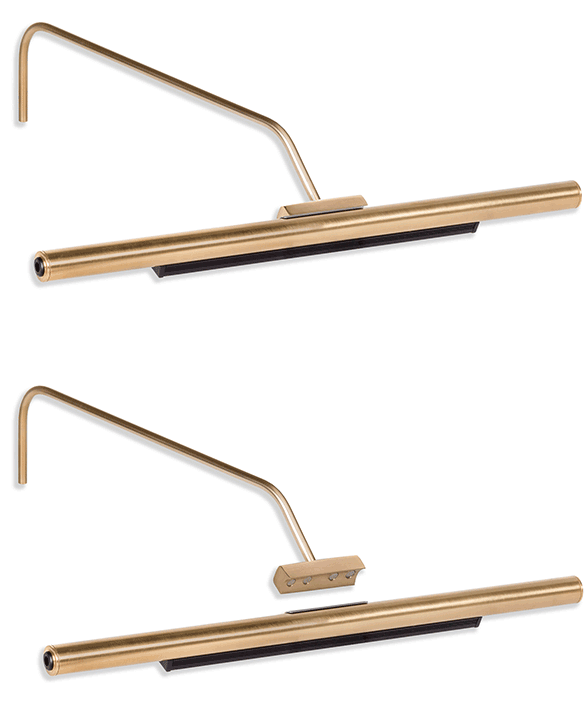
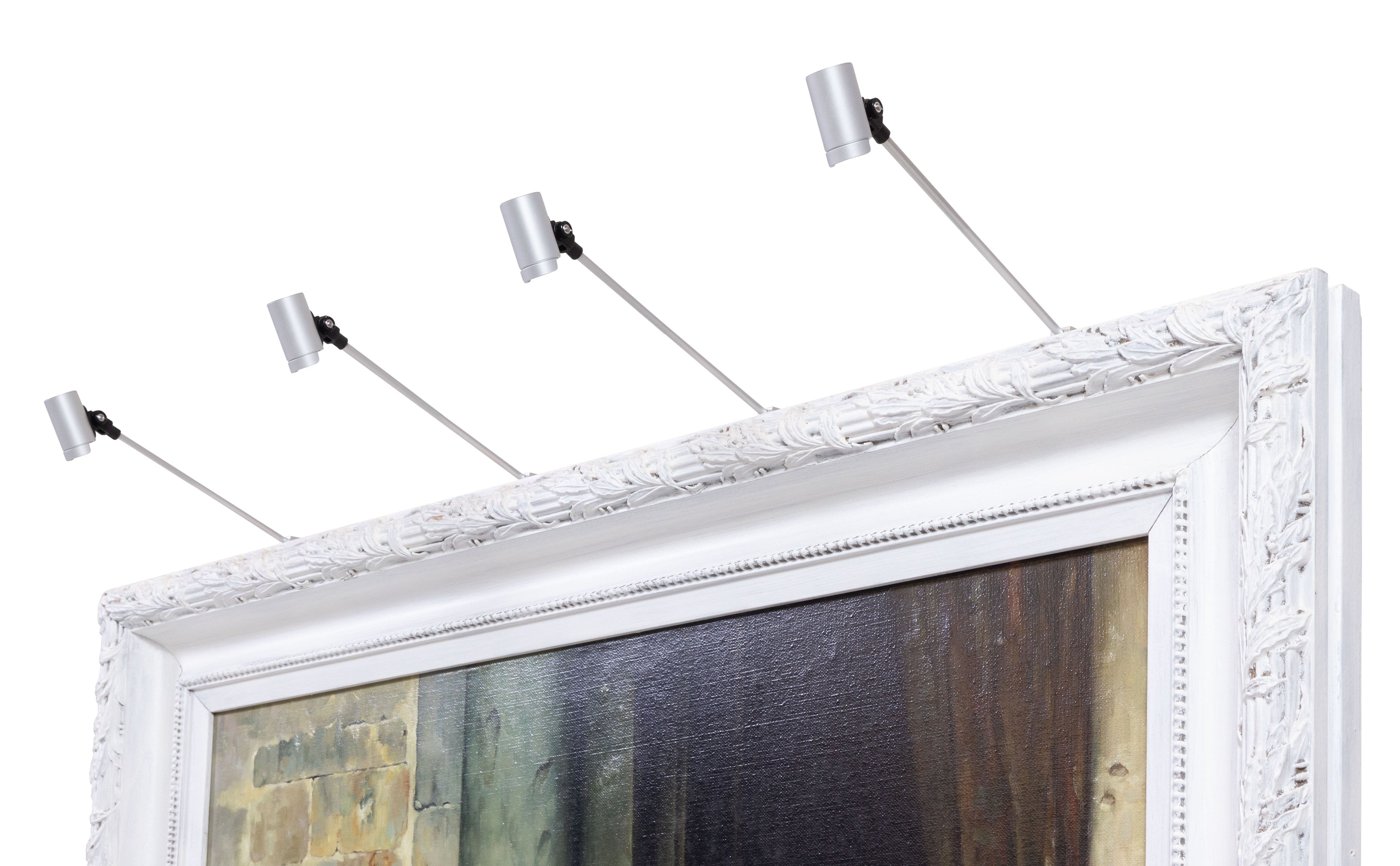
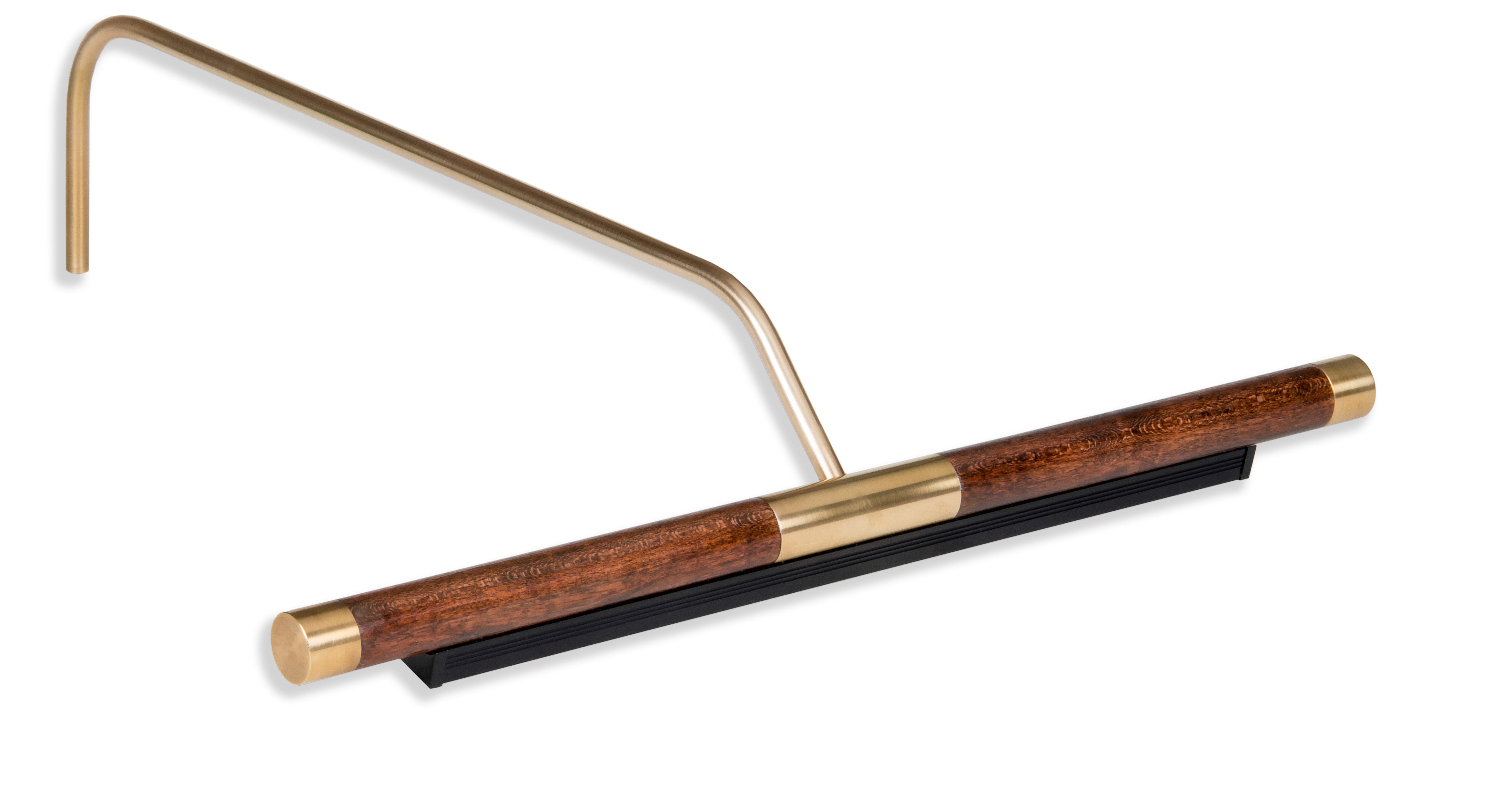
Beam angle is one of the most consequential and misunderstood variables in art lighting. Learn more with a complete guide to LED light beam angles for artwork.
Artwork deserves more than a light merely aimed in its direction. A fixture can have excellent output and high CRI and still produce a disappointing result if the beam angle is wrong for the work it is illuminating. Too narrow, and coverage falls short at the edges. Too wide, and light spills across the surrounding wall rather than the canvas. Getting beam angle right is as important as any other specification, and it is the one we see most often left to chance. Sharpen your knowledge with our complete guide to LED light beam angles for artwork
Why Beam Angle Matters More Than Brightness
Lumen output is easy to measure and easy to compare, which is why it gets most of the attention in fixture specifications. Brightness alone does not determine how well a piece of artwork is illuminated. A high-output fixture with the wrong beam angle will produce uneven coverage, visible hot spots, or excessive spill onto surrounding surfaces. A more modest fixture with well-engineered optics can outperform it by delivering controlled, consistent illumination exactly where it is needed.
Beam angle influences light uniformity, shadow placement, surface texture visibility, and the overall visual comfort of the viewing experience. These are the variables that determine whether a piece reads with depth and presence or simply appears lit. This is also why we specify our fixtures by recommended artwork size rather than leading with lumen output.
Lumens measure how much light a fixture produces. They do not tell you how that light distributes across a specific canvas from a specific distance. Recommended artwork sizes reflect actual tested performance across the full combination of optics, beam geometry, and mounting position. For collectors who want the underlying numbers, lumen output is available in the cut sheets within the Tech Specs section of each product page.
Narrow Beam Angles
Narrow beam angles typically fall between 10° and 30°. They concentrate output into a tight pattern with minimal spill, which is effective when the goal is to isolate a specific subject. Museums use narrow beams to draw attention to individual works within larger gallery spaces, or to emphasize sculpture where directional shadow is part of the viewing experience.
For framed artwork in residential or institutional settings, narrow beams are most appropriate for smaller pieces or where a deliberate high-contrast presentation is intended. They reveal surface texture well and deliver strong illumination intensity, but they require careful placement to avoid bright centers with underlit edges. On anything beyond a modest format, narrow beams from dedicated picture lights will typically leave the lower portion of the canvas noticeably darker than the upper portion without supplemental coverage.
Medium Beam Angles
Medium beam angles fall roughly between 30° and 50° and represent the most versatile range for picture lighting. They distribute light evenly across moderate-sized artwork without the coverage limitations of a narrow beam or the excessive spill of a wide one. Portraits, landscapes, and standard framed paintings generally respond well to this range.
Medium beams reduce the hot spot effect that narrower optics can produce while maintaining enough directionality to preserve texture and tonal depth. For most collections with artwork in the small-to-medium range, this is the starting point worth evaluating first before adjusting based on the specific characteristics of individual pieces.
Medium beams are particularly well suited to portrait-oriented artwork. The tighter lateral spread keeps light focused within the width of the canvas without excessive spill to either side. Vertical distribution carries illumination further down the face of the work than a narrow beam would from the same mounting position. This makes the medium beam range the most practical choice for tall paintings where vertical coverage is the primary challenge, and where a narrow beam would require either significantly greater mounting distance or supplemental lighting to reach the lower portion of the canvas adequately.
Wide Beam Angles
Wide beam angles, generally 60° and above, prioritize coverage over concentration. They are appropriate for large-format work, oversized photography, and panoramic or multi-panel installations where even distribution across a substantial surface area is the primary requirement. They can also serve installations where the fixture must be closer to the artwork than ideal, since the wider spread compensates for the reduced distance.
The tradeoff is spill. Wide beams illuminate more than the canvas, and surrounding wall surfaces, frames, and nearby objects all receive meaningful light. This reduces the visual contrast between the artwork and its environment, which can work against the presentation depending on the room and the intent of the display.
Beam Angle and Artwork Size Work Together
You cannot evaluate beam angle in isolation from artwork dimensions. A small framed drawing and a six-foot canvas require fundamentally different optical approaches, and a fixture appropriate for one will not serve the other well. Width and height both matter here. Wide panoramic works present different coverage challenges than tall vertical pieces, and neither responds the same way to the same beam geometry.
The variables that determine actual coverage are beam angle, fixture mounting height, arm length, and the distance from fixture to canvas. All of them interact. A narrow beam mounted very close to a tall painting illuminates only the upper portion. The same beam angle at greater distance covers more of the surface, because the projected circle of light expands with distance even though the angle itself remains the same. This geometry is why you need to consider fixture placement and optical design together, and why recommended artwork sizes are a more useful guide to real-world performance than beam angle alone.
Distance Changes the Effective Coverage Area
A complete guide to LED light beam angles for artwork requires careful attention to distance. The projected area of any beam expands proportionally with distance from the source. A 30° beam one foot from the artwork covers a compact area. The same beam at three feet covers considerably more surface, because the cone of light has had more distance to spread.
This relationship is why gallery systems mounted on ceilings use different optics than dedicated picture lights mounted close to the frame. The ceiling fixture needs a much narrower beam angle to achieve the same effective coverage from a much greater distance. Close-mounted picture lights work at distances where precision optics are essential. The margin between even coverage and visible drop-off is narrow, and the optical engineering determines whether the result is polished or merely adequate.
Choosing the Right Beam Angle for Your Collection
No single beam angle serves every piece well. A compact drawing, panoramic landscape, and large textured oil painting each present different requirements, and the right answer for one will not be the right answer for the others. Evaluating artwork dimensions, surface characteristics, mounting position, and viewing distance together produces better outcomes than selecting a fixture based on any single specification.
When beam angle, optics, and placement work together correctly, the lighting disappears from the viewer’s awareness entirely. What remains is the artwork. If you are working through these decisions for a specific piece or a collection and would benefit from a specialist’s perspective, our team is here to help. We also offer a range of battery operated art display lights suited to installations where wiring is not practical. Thousands of collectors, designers, and institutions trust us to get it right.