There is a version of this conversation that assumes something has gone wrong with an existing fixture. A bulb burned out, a driver failed, the output dropped after years of use. Those situations are real, but they represent a small portion of the collections we see that are not being lit well. The more common situation is that the artwork has never been lit as well as it could be, and no one has identified that as the variable worth addressing. General room lighting pressed into service, an undersized bar chosen without much deliberation, an older fixture with low CRI that seemed fine at the time: these are the conditions under which most artwork lives. The following signs are worth understanding regardless of how long your current fixture has been in place.
The Artwork Looks Flat or Less Vibrant Than It Should
This is the sign that is easiest to overlook, because it describes a condition rather than a change. If a piece has always been lit the same way, there is no reference point for what it would look like under better light. Colors that appear slightly muted, tonal relationships that seem compressed, and texture that reads as less dimensional than it should are all common symptoms of inadequate picture lighting, not of a painting that lacks vitality.
Color Rendering Is Below the Standard the Work Deserves
CRI is the single most consequential specification in picture lighting, and it is the one most frequently ignored at the point of purchase. A source below 93 CRI will fail to distinguish between deep navy and charcoal, between warm dark brown and cool near-black, between the greenish undertone in a shadow passage and the purple-black beside it. These distinctions are often where an artist’s skill is most concentrated, and a low-CRI source renders them invisible.
This applies to general room fixtures, older halogen picture lights, and first-generation LED bars equally. CRI is not a premium feature reserved for museum installations. It is the baseline standard for any fixture claiming to serve as picture lighting. If your current source has low CRI, the artwork is being seen through a filter that distorts it in ways that are difficult to articulate but immediately apparent under comparison.
Coverage Is Uneven Across the Canvas
A picture light should illuminate the canvas from edge to edge with consistent output. Brighter bands near the top, darker passages toward the lower edge, or stronger illumination on one side than the other are all signs that the optics or the bar length could possibly be better matched to the artwork. An undersized fixture produces exactly this result: a well-lit upper portion with diminishing coverage as the distance from the light source increases. The problem compounds with canvas height, which is why large and tall works are particularly unforgiving of a poorly chosen fixture.
This is also where the quality of the optical system matters beyond raw output. A traditional reflector-based bar relies on the default optical performance of the bulb or bare LED element, distributing light in a broad arc determined by the source geometry rather than by the shape of the canvas it is meant to illuminate. Purpose-engineered optical systems are designed differently. They gather and redistribute light based on the specific dimensions and proportions of the artwork, shaping the beam in both axes to carry illumination further down the face of the work and more evenly across its full width. The difference between a fixture built around a bare LED and one built around a precision optical system is not subtle on a large or tall canvas. It is the difference between a fixture that lights the top of the painting and one that lights the painting. If your current fixture leaves the lower portion of the canvas noticeably darker than the upper, the optics are the likely cause and no amount of repositioning will fully resolve it.
The Color Temperature Is Working Against the Artwork
Color temperature selection is a decision that most people make once, early, without much deliberation, and then live with indefinitely. A source that is too cool will flatten warm-toned oil paintings, make earth tones read as gray, and strip the intimacy from work that depends on warmth to read as intended. A source that is too warm can muddy cool palettes, obscure blues and greens, and make photography read as artificially golden. Neither is a fixable problem with placement or output. It is a fundamental mismatch between the source and the medium.
For most traditional oil paintings and works with rich earth tones, a source in the 2700K to 3000K range is appropriate. For photography, contemporary work, and cooler palettes, 3000K to 3500K tends to serve better. If your current fixture produces a color cast that you have simply adapted to over time, it may be worth questioning whether the adaptation was the right response.
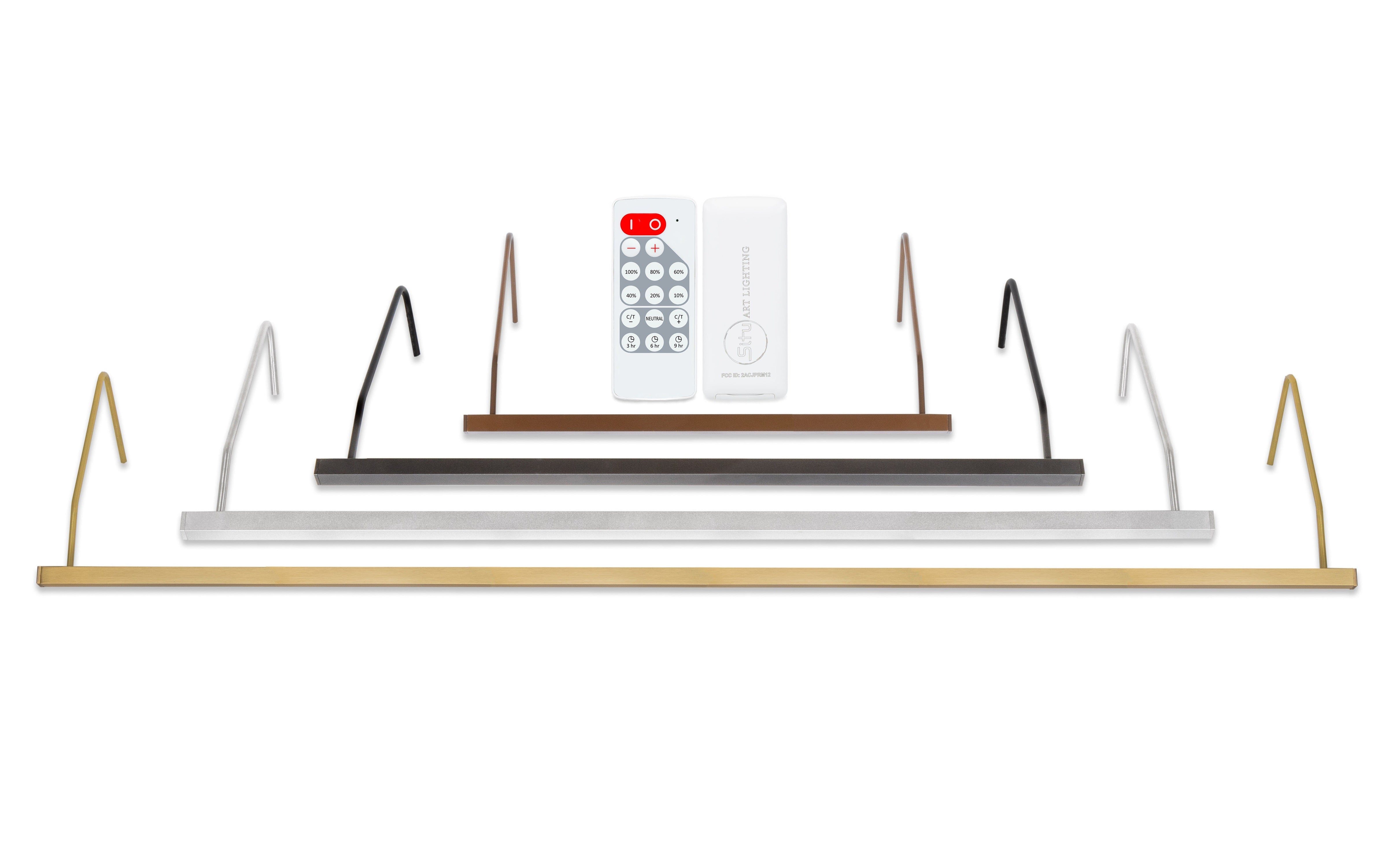
Worth noting for collectors with varied or evolving collections: color-tunable picture lights allow the color temperature to be adjusted across a range, typically 2700K to 4000K, without any change to the fixture or its position. This is a meaningful capability when a single wall carries works in different media, or when pieces rotate and the medium changes between installations. Crucially, tunable fixtures are not required to trade CRI for range. The best available options maintain 95+ CRI across the full tuning range, which means color accuracy is preserved at every temperature setting rather than being optimized only at a single point. A collector who has historically chosen a fixed color temperature and lived with its limitations on certain pieces now has an alternative that removes the compromise entirely.
The Fixture Is Generating Heat Near the Artwork
Incandescent and halogen sources generate significant radiant heat. If your current picture lighting uses either technology, the thermal output directed at the canvas is a preservation concern worth taking seriously regardless of whether you have noticed any visible effect yet. Canvas, panel, varnish, and works on paper all respond poorly to sustained heat cycling over time. The damage is cumulative and largely irreversible.
High-quality LED picture lights run cooler by design. They produce near-zero UV output and minimal radiant heat, which makes them a meaningful upgrade from a preservation standpoint entirely independent of their optical performance advantages. For collectors with significant work on display, this is not a secondary consideration.
The Fixture Has Been Outgrown by the Work
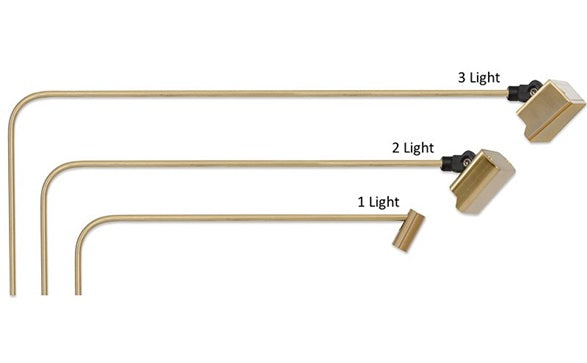
Collections evolve. A fixture selected for one piece may have been entirely appropriate at the time and is genuinely no longer suited to the work now hanging beneath it. Collectors who gradually acquire larger paintings, wider formats, or more significant pieces find that picture lighting chosen years ago no longer matches the demands of the current installation. Bar length relative to canvas width, output relative to canvas size, and beam geometry relative to canvas height all need to be reconsidered when the work changes, not just when the fixture ages.
Fixture selection should follow from the artwork rather than precede it. This is true at the point of initial purchase and equally true each time the collection changes in a meaningful way.
The Room Has Changed Around the Fixture
Renovations frequently expose picture lighting decisions that seemed adequate in a previous version of the space. New wall colors shift how reflected light reads. Updated ambient fixtures change the color temperature environment that the picture light operates within. Reframing or moving artwork changes the size, placement, and orientation that the fixture was originally chosen for. A picture light calibrated for a room that no longer exists may be producing results that look off without any obvious single cause.
Artwork deserves lighting calibrated to the space as it exists today. Revisiting the lighting decision after a significant renovation is part of completing the work properly rather than an optional finishing step.
The Installation Itself Has Become Part of the Problem
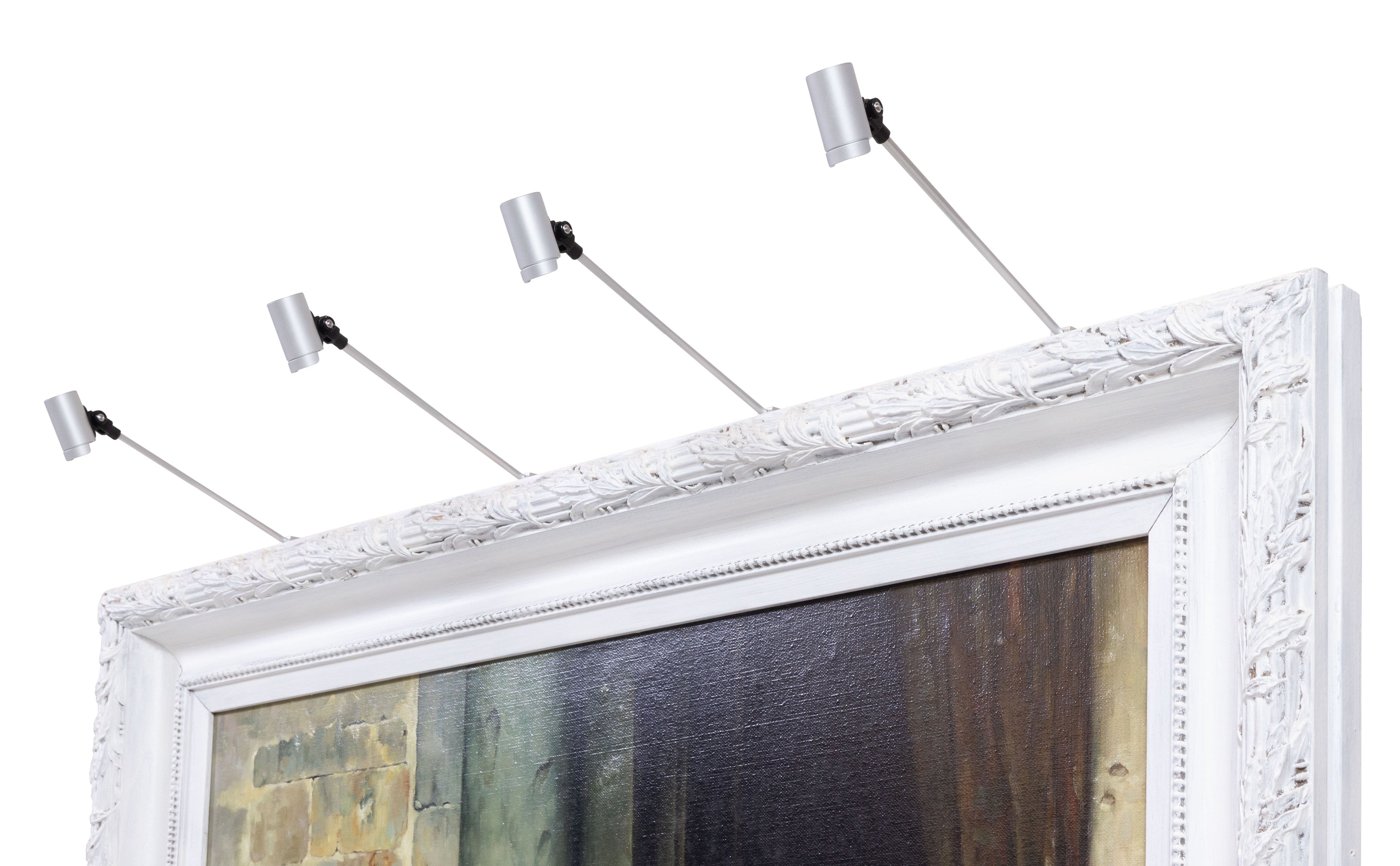
Wiring and cord management are worth raising in this conversation because they are among the most common reasons a picture light that performs adequately still undermines the presentation. An exposed wire running down the wall, a cord cover that draws the eye, or a visible plug path from fixture to outlet introduces a visual element that competes with the artwork itself. These are installation problems rather than fixture problems, but they have the same effect: the viewer notices the hardware before the painting.
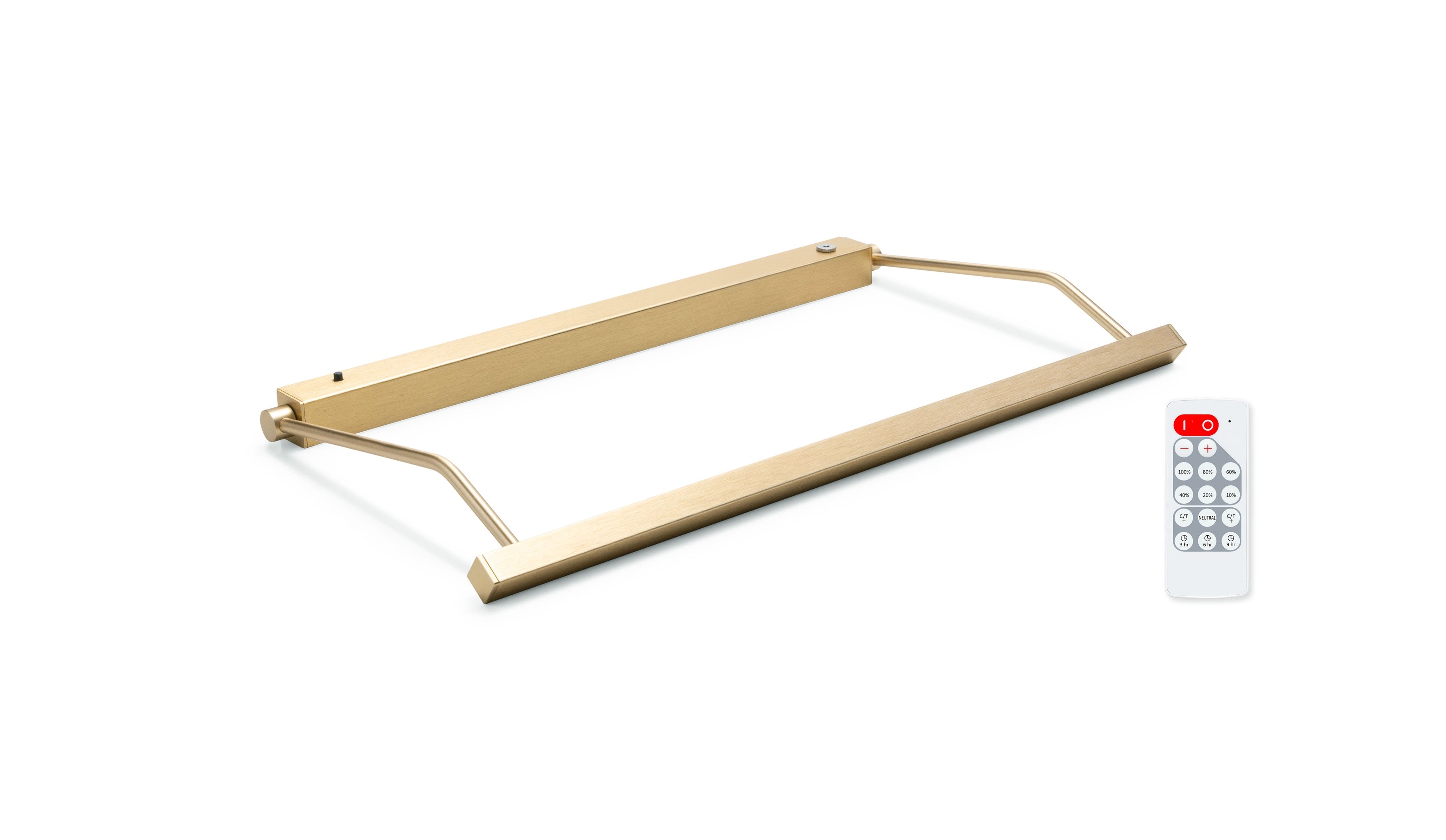
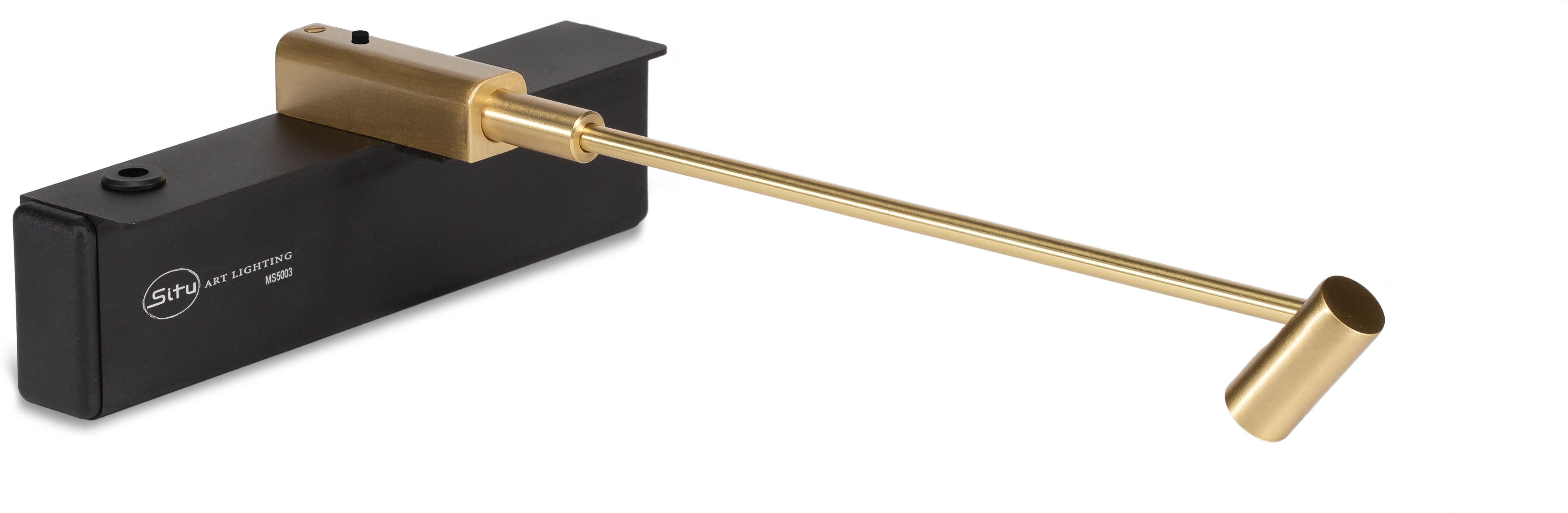
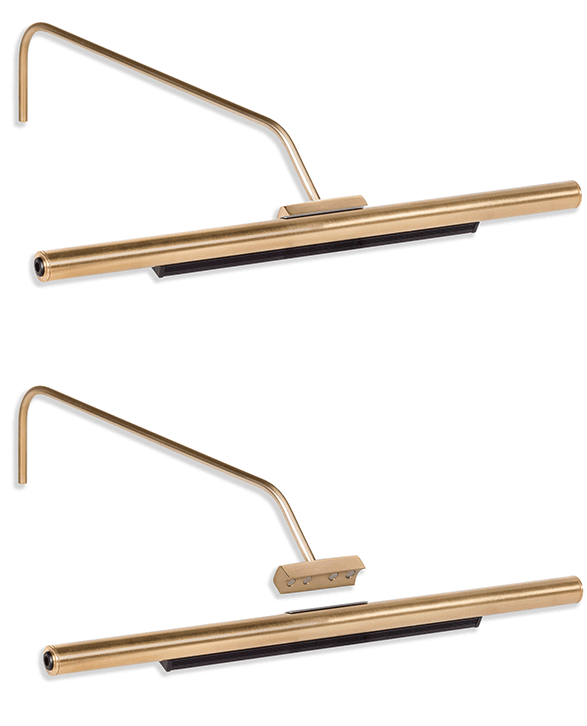
Wireless picture lights address this entirely. Because they mount without wiring and draw no cord from wall to outlet, they remove the installation from the visual equation. The artwork hangs as it would in a gallery, with illumination that appears to originate from above without any visible evidence of how it gets there. For collectors managing exposed wiring on an existing installation, upgrading to a wireless fixture resolves both the performance and the presentation in a single change. Each fixture removes from its mount in seconds with one hand and no tools, making recharging straightforward and the transition from a wired installation considerably simpler than it might appear.
What to Look for in a Replacement
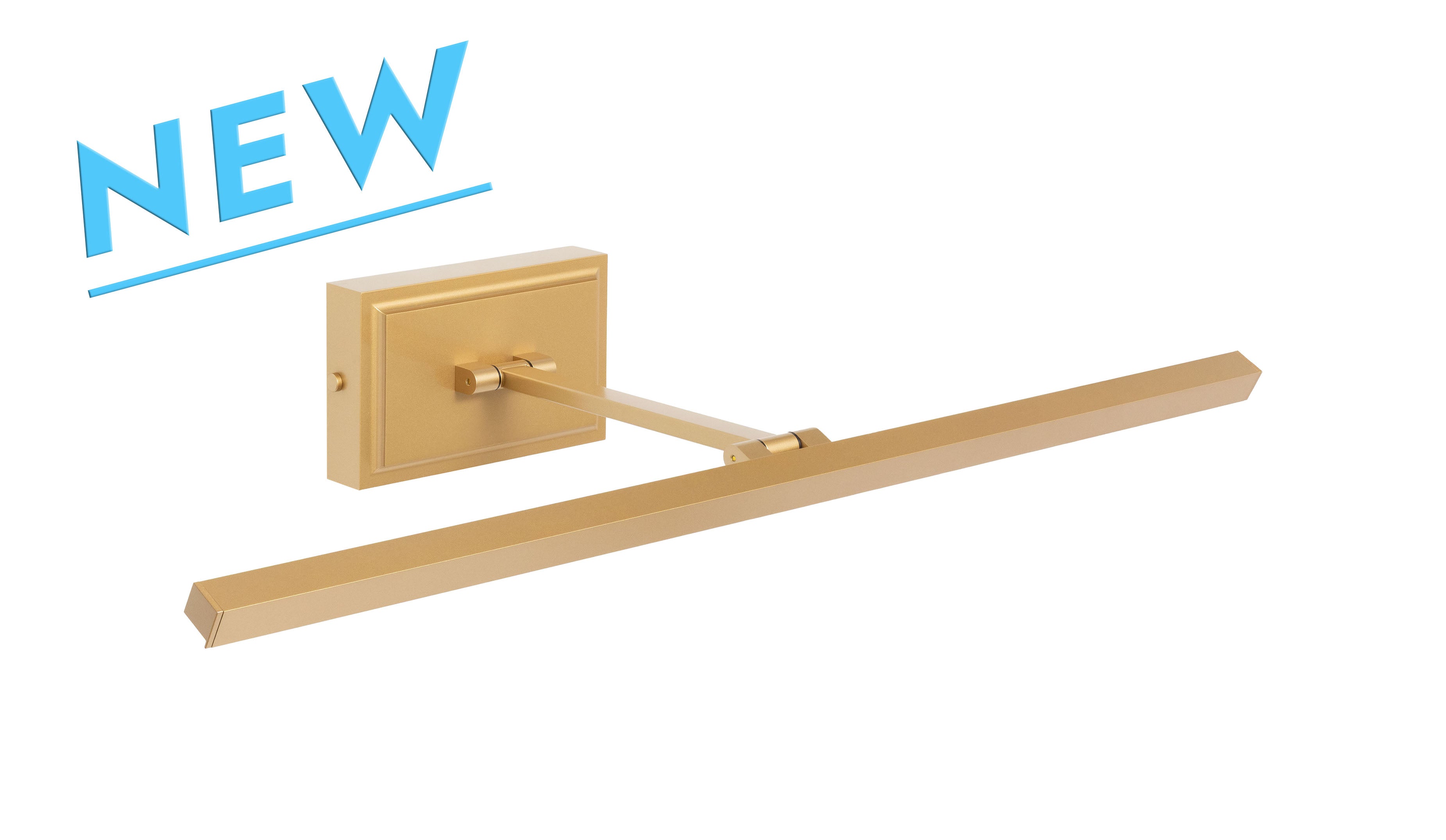
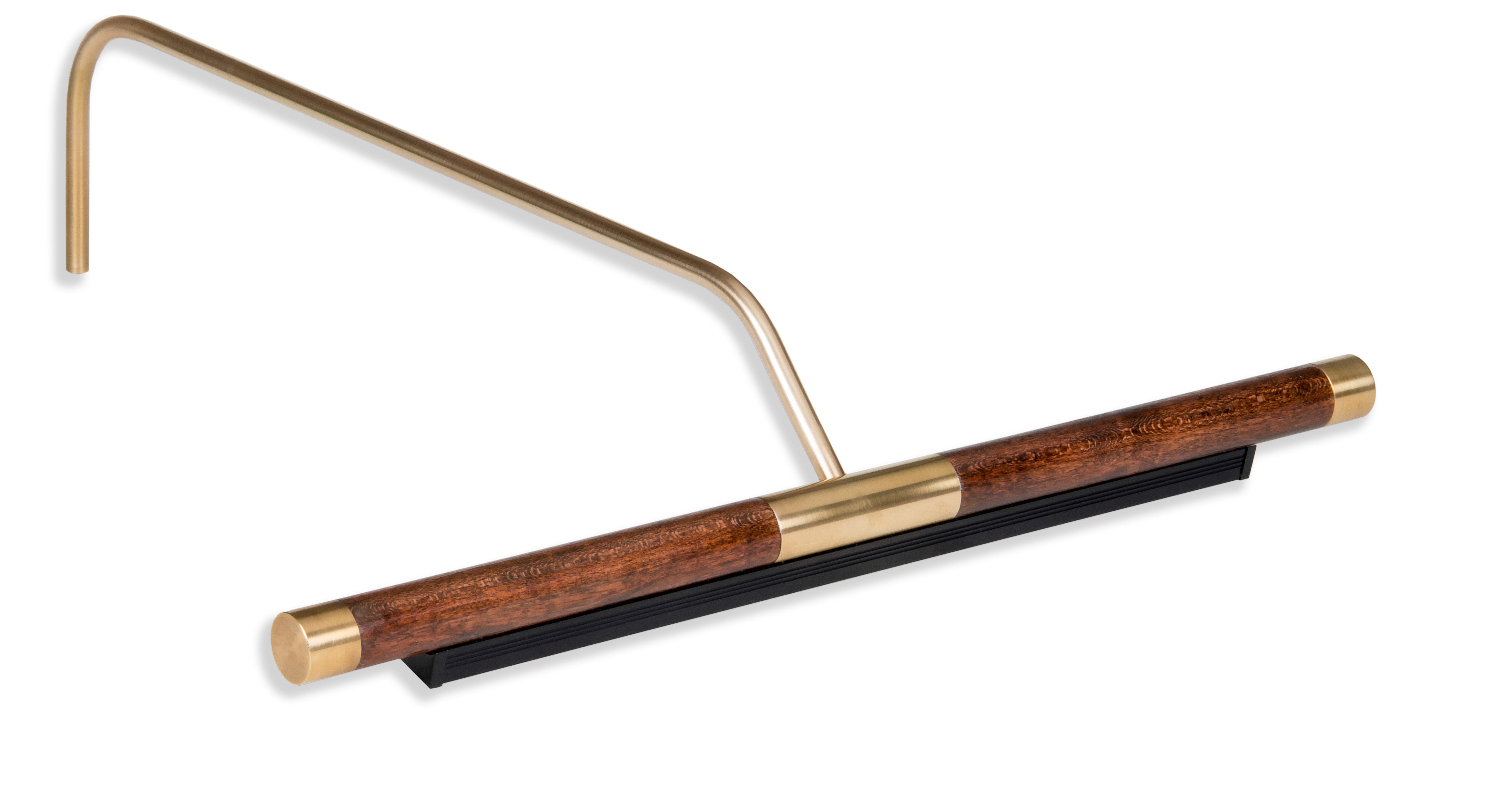
Any of the signs above is worth addressing, and most of them point toward the same solution: a purpose-built, high-CRI LED picture light properly sized and specified for the work it is illuminating. The decisions worth making together are bar length relative to canvas width, color temperature relative to the medium and the room, CRI relative to the chromatic complexity of the work, and whether a wired or wireless installation better serves the space.
Our specialists work through these decisions with collectors and designers every day. Share the artwork, the space, and what the current lighting is failing to do, and we will identify the right wireless art lights or wired solution for what the work needs. Thousands of collectors, designers, and institutions trust us to get it right.