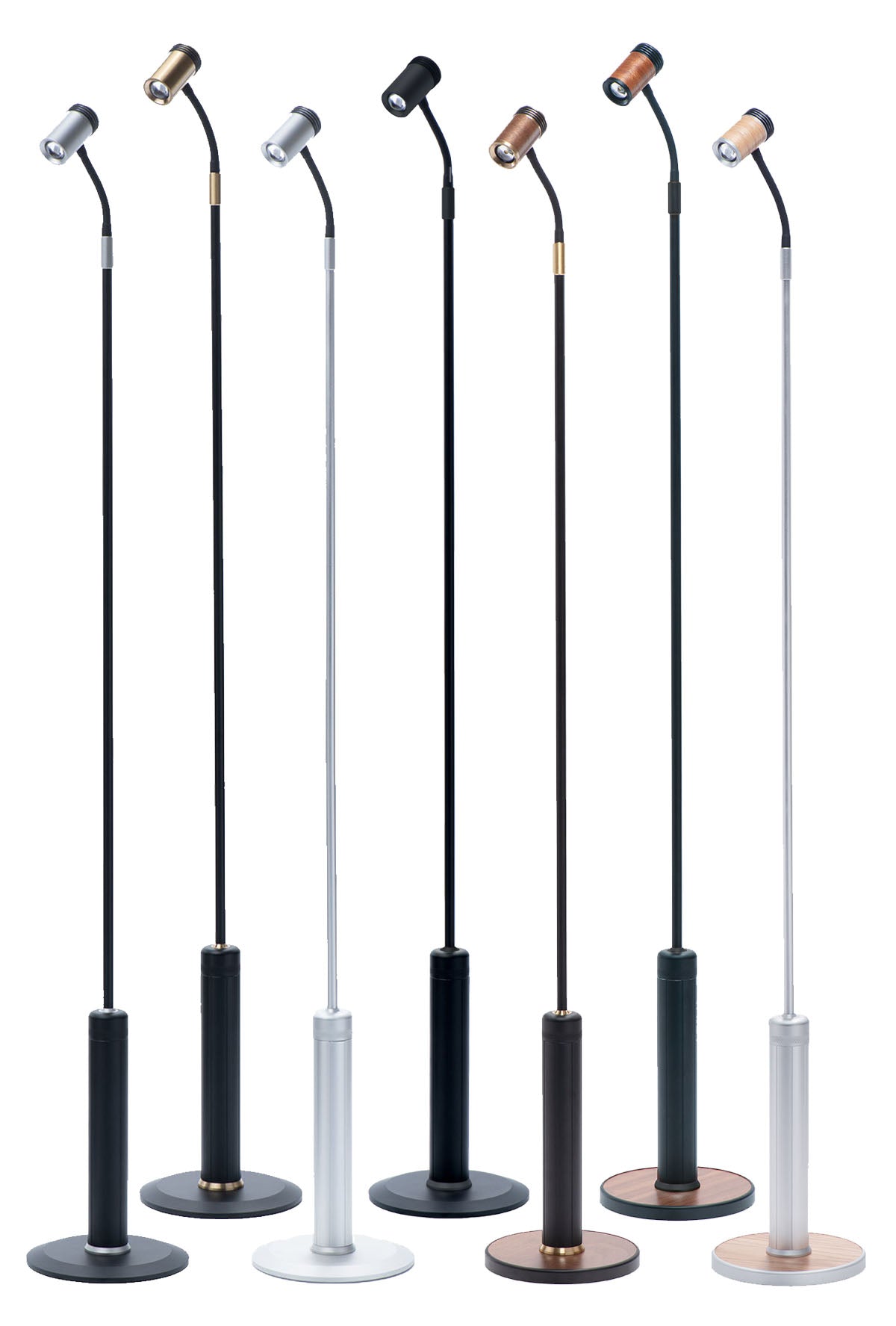
A thoughtfully curated gallery wall tells a story. It might showcase a collection assembled over decades, bring together favorite artists, or group pieces that share a common thread. Even the most carefully composed display falls short if the lighting doesn’t receive the same level of attention, because every detail that makes a piece compelling, its color, its texture, its contrast, depends on the light revealing it.
Achieving a refined result doesn’t require a museum-scale budget or a full renovation. With the right approach to art lighting, a gallery wall can read as intentional and resolved rather than assembled piece by piece. What follows covers the decisions that matter most when lighting a wall with multiple works.
Start With the Artwork, Not the Fixture
Every gallery wall is different. A collection of oil paintings calls for different lighting decisions than framed photography, watercolors, mixed media, or shadowbox displays, and those decisions should be made before any fixture is selected. Dimensions, frame materials, surface texture, the presence of glazing, and the dominant tones across the collection all shape how light interacts with each piece.
A heavily textured oil painting benefits from directional illumination that reveals brushwork and surface relief. A framed photograph behind glass demands careful placement to minimize reflection. When the lighting strategy starts with the artwork itself, the result feels considered rather than decorative.
Evaluate the Surrounding Environment
A gallery wall does not exist in isolation. The room around it shapes how viewers approach and perceive the work. Natural light deserves particular attention here. Direct sunlight gradually damages pigments, papers, and textiles through cumulative UV exposure, and a wall positioned opposite large windows can experience significant swings in brightness between morning and evening. Those swings create inconsistent viewing conditions and place avoidable stress on sensitive works.
Ambient room lighting matters as well. Overhead fixtures, sconces, and floor lamps all contribute to the visual environment surrounding the wall. The strongest installations create harmony between dedicated art lighting and the room’s general lighting rather than allowing the two to work against each other.
Prioritize Even Light Distribution
Consistency is one of the defining qualities of a professionally lit gallery wall. Every piece should receive coverage appropriate to it, free of hot spots, harsh shadows, or dramatic brightness variation. This becomes especially important once multiple works share a wall. If one piece reads substantially brighter than its neighbors, the visual balance of the entire arrangement suffers, regardless of how well any individual piece is lit.
For this reason, we recommend lighting each piece on a gallery wall individually rather than relying on a single fixture for the whole arrangement. The most important reason is independent brightness control. A dark composition needs more light to bring out its detail than a light composition does, and a single fixture asked to serve both will tend to overexpose one piece, underexpose the other, or in some cases manage both at once. That tension is visible even with just two works on a wall, and it compounds quickly as a collection grows.
A related problem emerges with pieces hung vertically, one above another. Just as a single fixture struggles to balance brightness across compositions of different value side by side, light intensity also falls off with distance from the source, which means a fixture positioned to properly illuminate the upper piece in a stack will leave the piece below it underlit. The further down the stack, the more pronounced the falloff becomes. This is the same underlying issue as horizontal inconsistency, distance and value differences both work against a single source, just expressed vertically rather than across a wall.
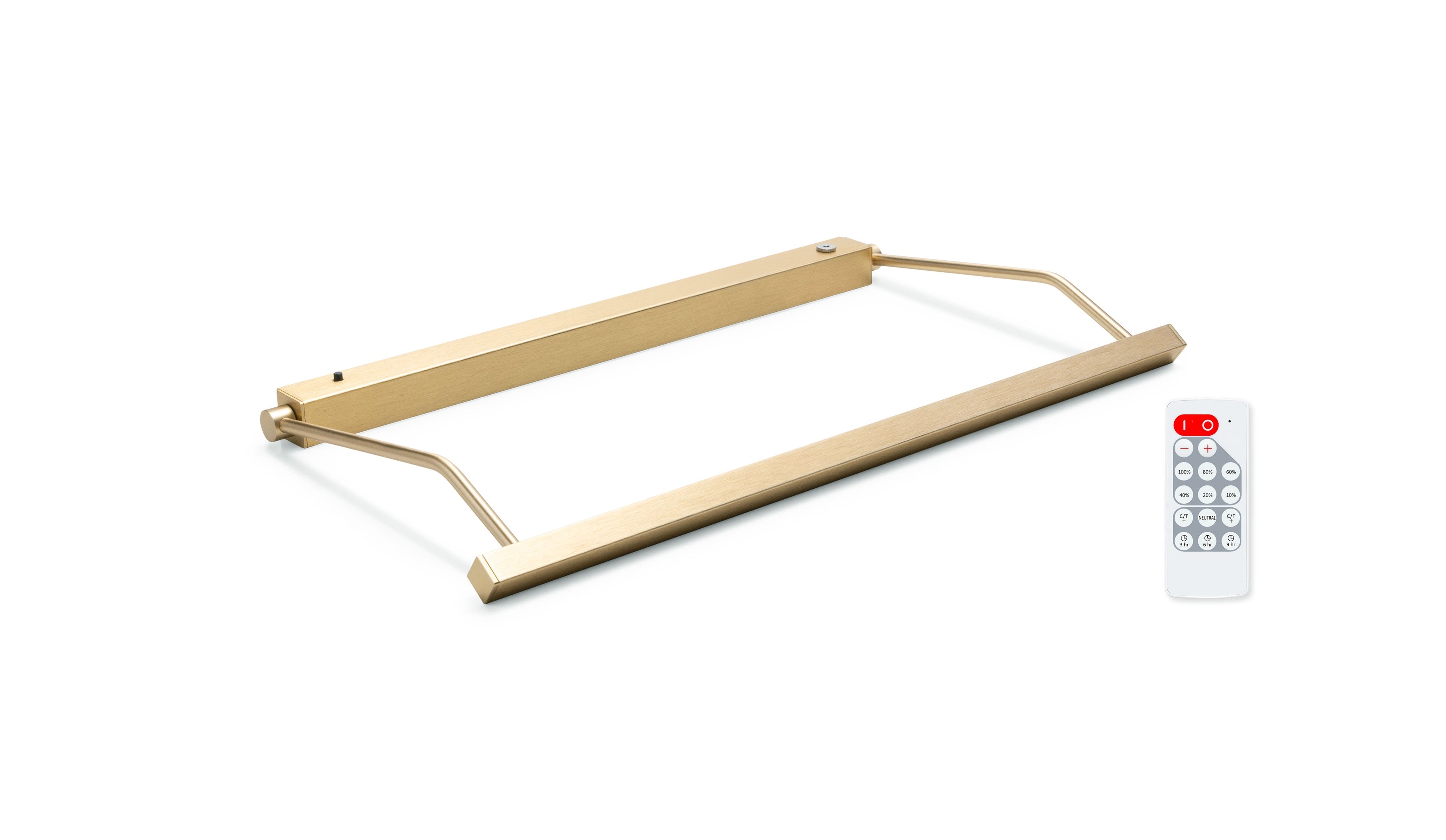
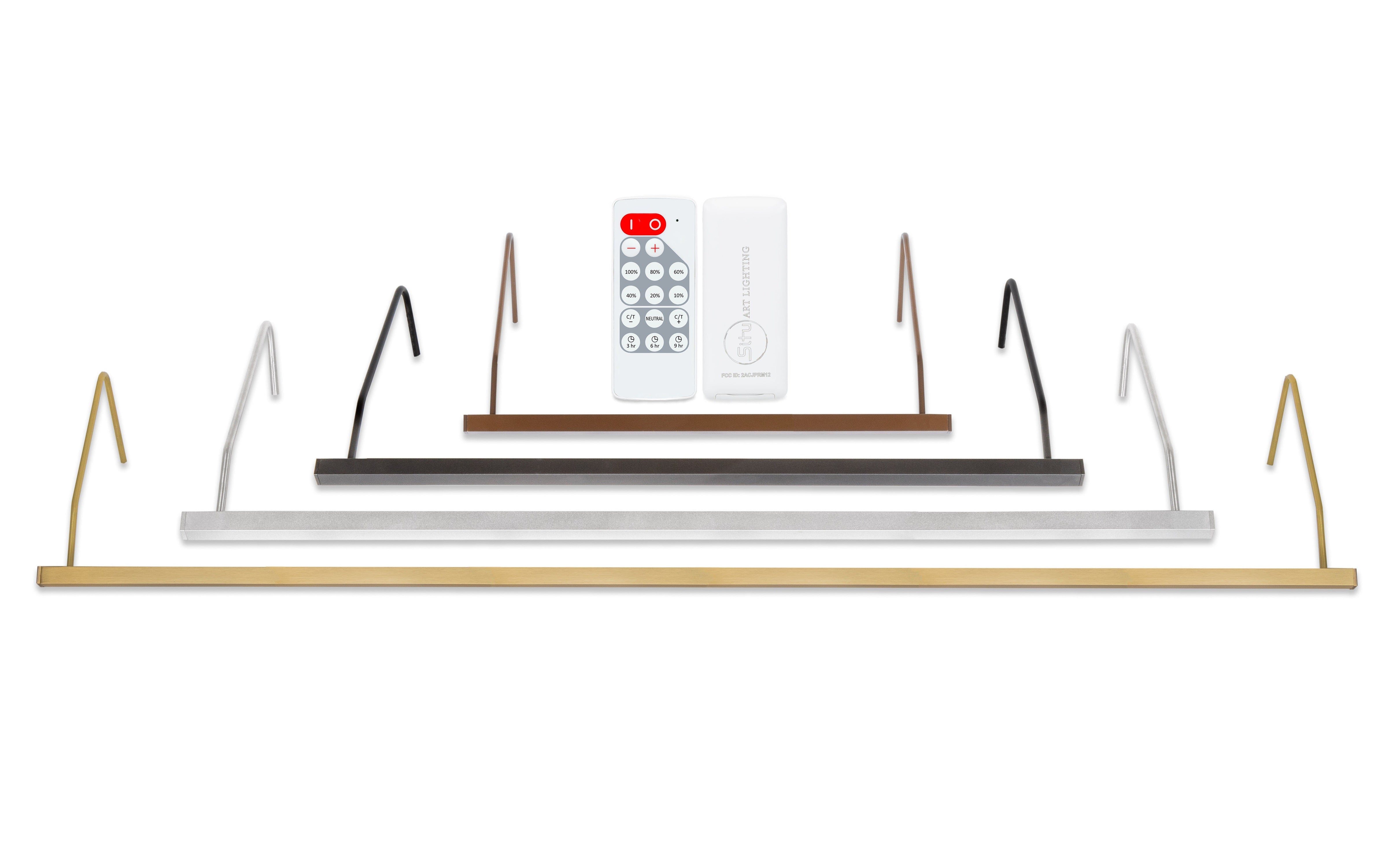
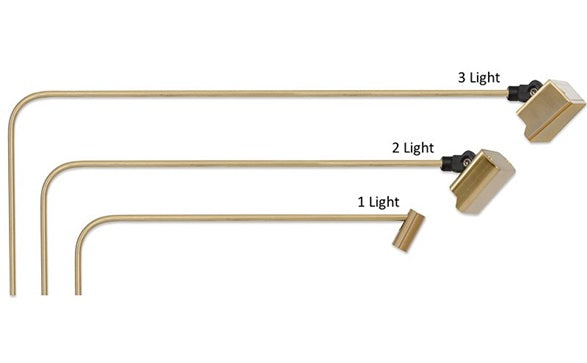
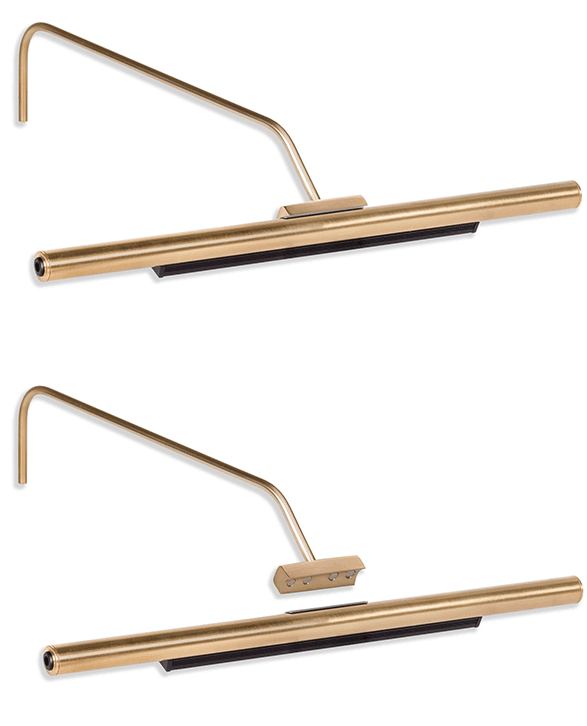
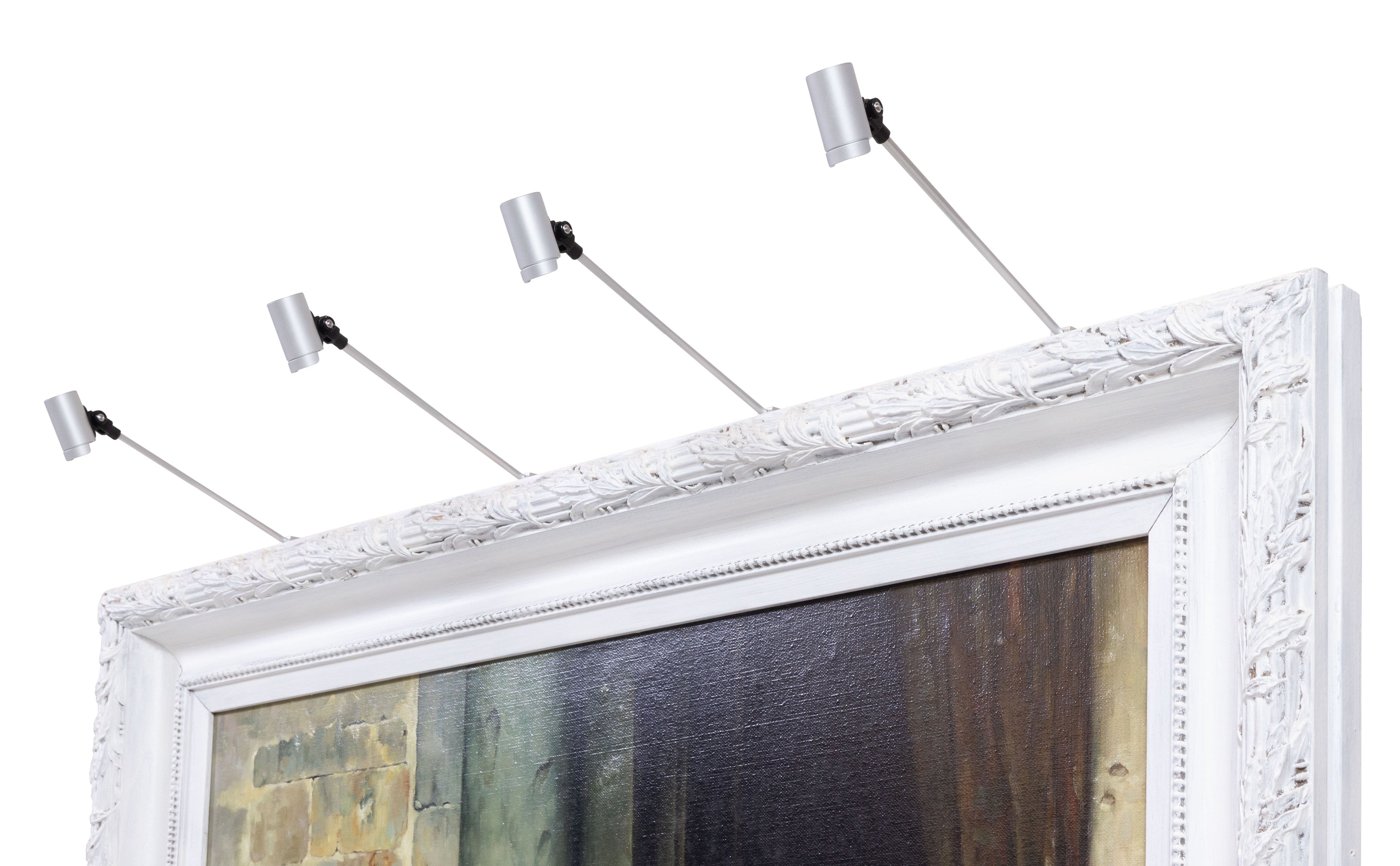
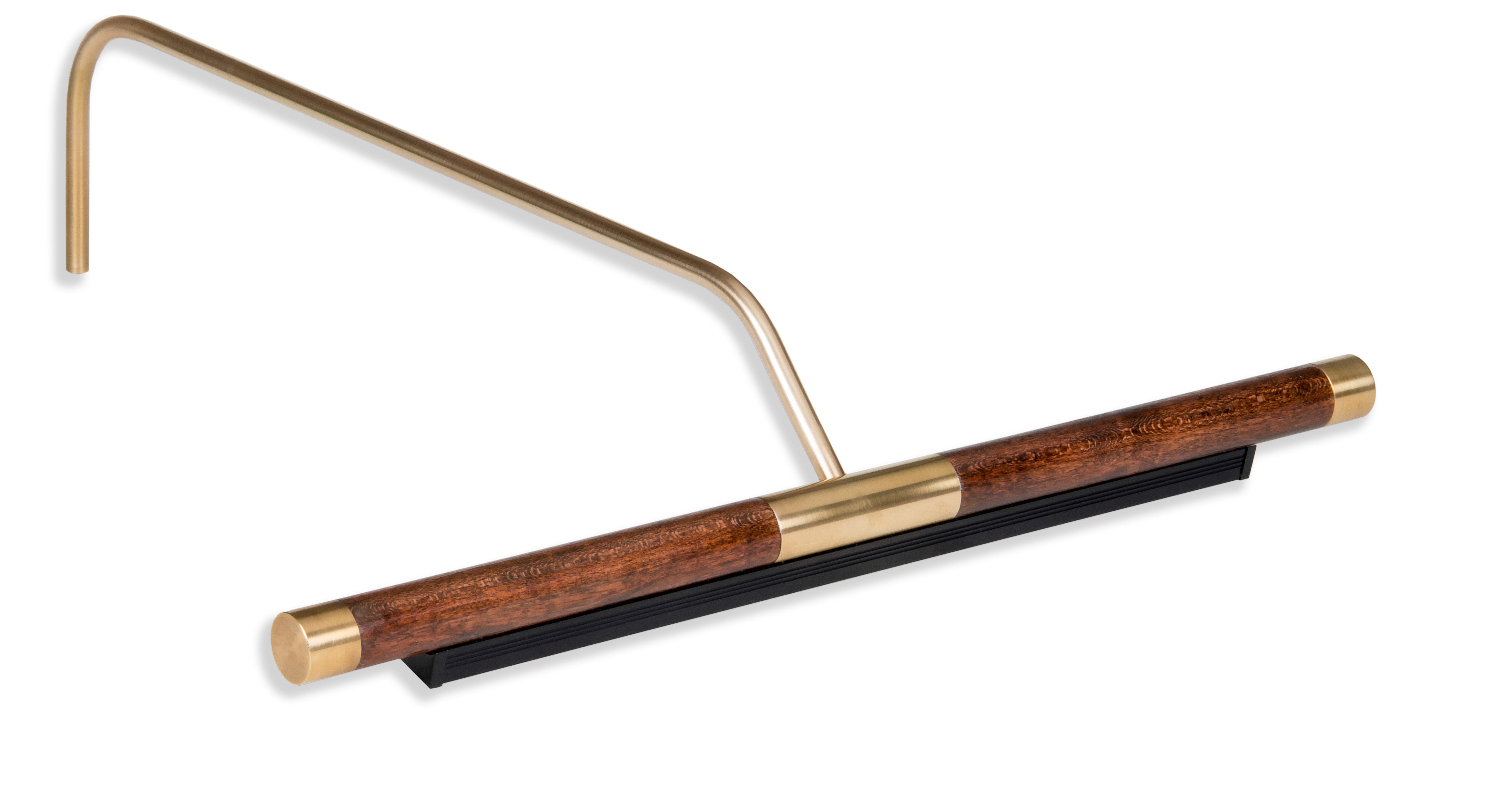
Purpose-built picture lights address this directly. Each fixture directs illumination precisely where it’s needed, and proper sizing allows light to spread evenly across a given piece without bright bands or dark corners, independent of what the work beside it requires.
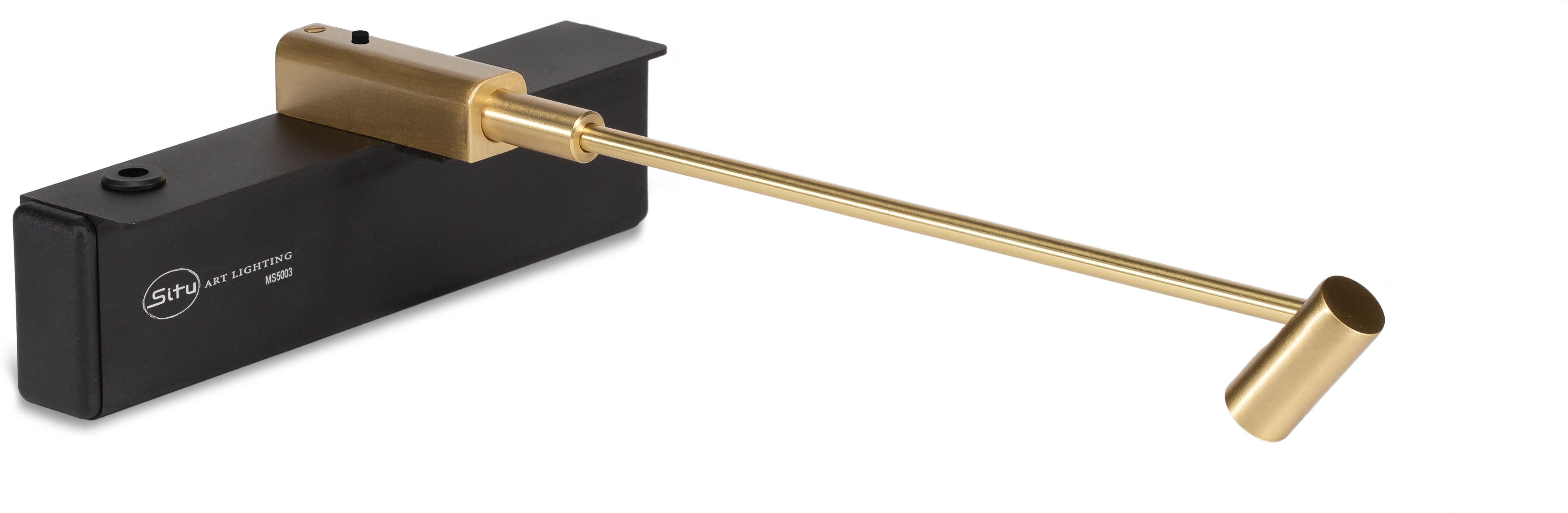
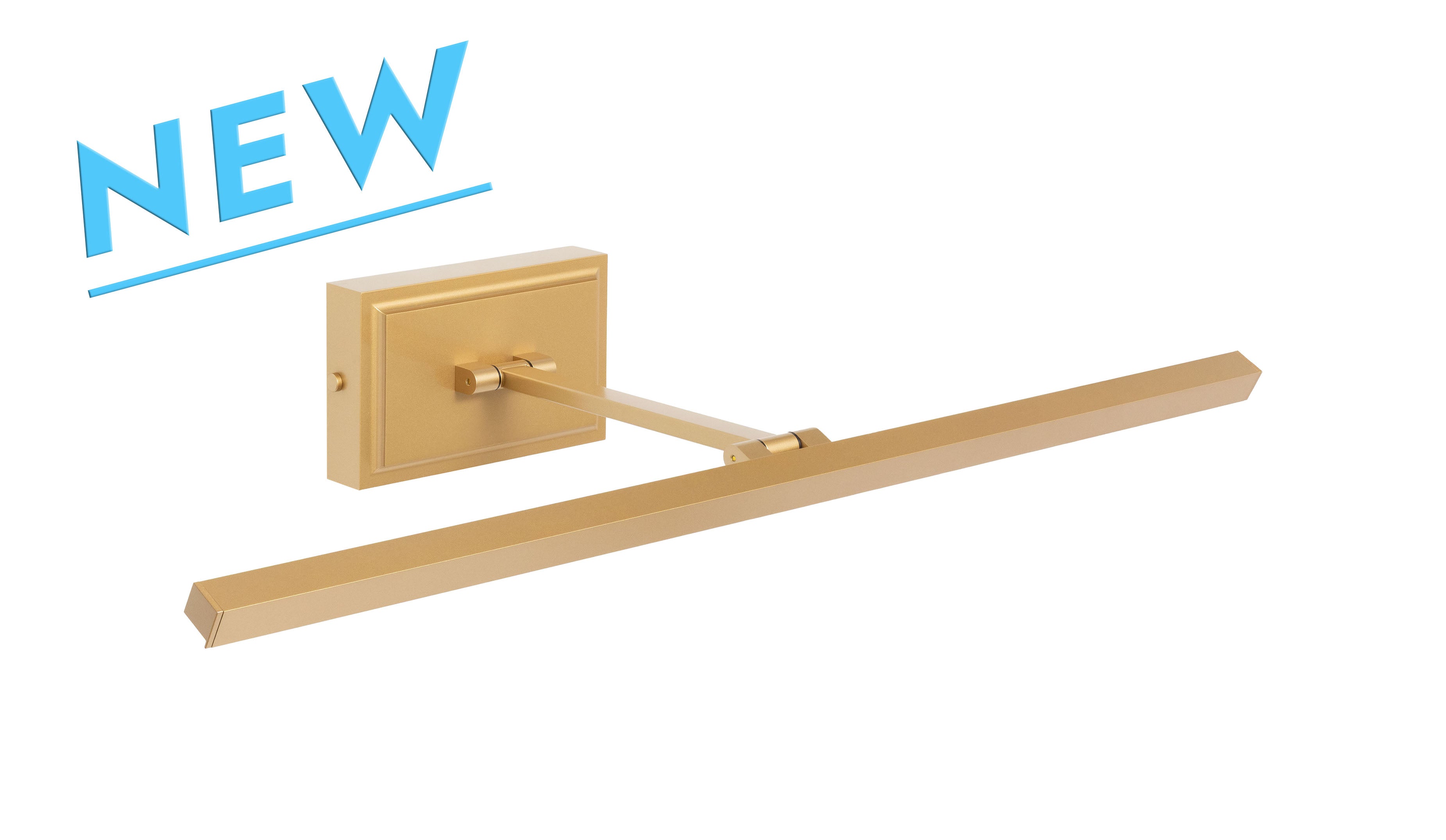
Lighting each piece individually introduces a practical question: what to do with the wiring and mounting hardware for multiple fixtures across one wall. For collectors who prefer a single fixture despite the tradeoffs above, our Direct Connect Vision Series is built specifically for this scenario. It operates from a single central arm with no exposed wiring or visible mounting hardware, which makes it the cleanest available option when a unified gallery wall calls for one continuous light source rather than several independent ones.
Choose the Right Color Temperature
Color temperature has a significant influence on how artwork reads, and even subtle shifts change both the mood of a display and the perception of color within it. Warmer temperatures, typically between 2700K and 3000K, complement oil paintings and collections with rich earth tones, creating an atmosphere that feels inviting rather than clinical. Neutral temperatures around 3000K tend to offer the broadest versatility, rendering color accurately while remaining comfortable in residential interiors. Cooler temperatures suit contemporary photography and some modern work, though they can read as sterile in a traditional gallery setting.
The goal is not to chase a specific number for its own sake but to choose a temperature that suits both the artwork and the room. On a gallery wall with multiple pieces, this decision should be made once for the entire wall rather than piece by piece. Even when individual works vary in composition, tone, and value, matching color temperature to each piece individually becomes distracting once those pieces sit next to one another. A unified color temperature across the wall lets the differences between pieces read as intentional variation in the art itself, not inconsistency in the lighting.
Don't Overlook Color Rendering
Color temperature gets most of the attention, but color rendering matters just as much. CRI measures how accurately a light source reproduces the full range of visible colors in what it illuminates. A lower CRI source can distort subtle hues, flatten tonal transitions, and quietly diminish the richness of a piece in ways that aren’t always obvious until the work is seen under better light.
Below roughly 93 CRI, this distortion becomes more apparent. Deep blues lose vibrancy, reds lose complexity, and the subtle color relationships an artist built into the work become harder to see. Above that threshold, fixtures render color with a fidelity that makes those relationships easy to read, and the differences between fixtures at 93 and above tend to be largely unnoticeable to the eye. For a gallery wall specifically, every fixture should sit at or above this standard. A wall where one piece is lit below 93 CRI and its neighbor is lit above it may show a visible difference in color accuracy between the two, even if both individually look acceptable in isolation. Uniform CRI of 93 or higher across the wall is what makes the collection read as a single, considered presentation.
Position Fixtures Carefully
Placement influences the final result as much as the fixture itself. Mounted above a piece, plug-in picture lights should direct illumination across the surface without introducing glare, and small adjustments in positioning can meaningfully change the viewing experience.
Artwork behind glass requires even more precision. Reflections from windows, lamps, and overhead fixtures may interfere with visibility if the lighting and viewing angles are not properly calibrated. Before finalizing an installation, view the wall from multiple positions throughout the room. What looks resolved from one vantage point may reveal glare or uneven coverage from another, and a few extra minutes spent fine-tuning placement make a real difference. For more on this, see our article on glare and how to remove it from artwork.
Layer Light for a More Sophisticated Result
The strongest gallery wall installations rarely depend on a single source of illumination. Dedicated picture lighting highlights the collection itself, while ambient room lighting establishes a comfortable viewing environment around it. Together, they prevent artwork from appearing isolated against a dark wall and create a smoother transition between illuminated pieces and the architecture surrounding them.
The result feels integrated in the way professional gallery presentations do, where the lighting supports the collection without calling attention to itself.
Use Dimming to Adapt Throughout the Day
Lighting needs rarely stay constant. Daylight levels shift, evening gatherings call for a different mood than daytime viewing, and preferences change over time. Dimmable picture lighting accommodates all of this without any change to the installation itself. Slightly higher output during the day can help the wall hold its own against ambient daylight, while reduced brightness in the evening creates a more intimate atmosphere.
Dimming also supports the long-term condition of the collection by reducing cumulative light exposure on sensitive works over time. Rather than treating illumination as a fixed setting, dimming lets a gallery wall adapt to changing conditions without compromising how the work is seen.
Illuminate Your Gallery Walls for Long-Term Enjoyment
Art lighting done well serves two purposes simultaneously. It enhances how the work is seen, and it supports the long-term condition of the collection. When fixture selection, placement, color quality, and the surrounding environment all work together, a gallery wall can be appreciated the way the artists intended each piece to be seen.
The best installations never draw attention to the lighting itself. What viewers notice instead is the richness of color, the depth of texture, and details that might otherwise go unseen. That quiet effectiveness is the mark of a well-designed lighting plan. If you’re working through these decisions for your own collection, our specialists are here to help you identify the right fixtures for your space, your medium, and your installation. Thousands of collectors, designers, and institutions trust us to get it right.