Large-scale artwork presents a picture lighting challenge that smaller pieces rarely require. A fixture that illuminates a standard 24x30 canvas beautifully will produce uneven coverage, hot spots, or soft edges on a work twice that size. Scale amplifies every decision, and the variables that are easy to overlook on a smaller piece become impossible to ignore at larger format.
The good news is that oversized artwork, when lit correctly, can define an entire interior. What follows is a practical guide to the decisions that matter most, informed by years of working with collectors, designers, and institutions on exactly these problems, and by the engineering work we’ve put into building picture lights specifically designed to handle them.
Start With Placement Before Fixture Selection
The most common mistake in lighting large artwork is selecting a fixture before resolving placement. Wall position, viewing distance, and the behavior of natural light in the space all shape what a picture light can accomplish. A piece hung too close to an adjacent wall, a doorframe, or a competing architectural element will never read as intended regardless of how well the fixture performs.
Natural light warrants particular attention with large works. The surface area exposed to direct sunlight on an oversized canvas is proportionally greater, and cumulative UV exposure accelerates pigment degradation, varnish yellowing, and support deterioration over time. Walls that receive direct afternoon sun are poor candidates for works on paper, watercolors, or any piece with fugitive pigments. Where placement cannot be changed, UV-filtering glazing is a practical mitigation, though it introduces its own optical considerations for unglazed oil paintings.
Bar Width Is Not Just a Proportional Decision
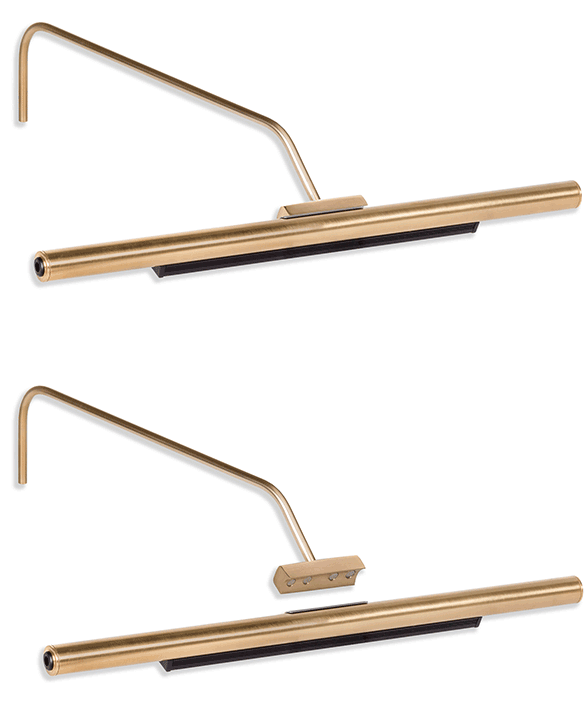
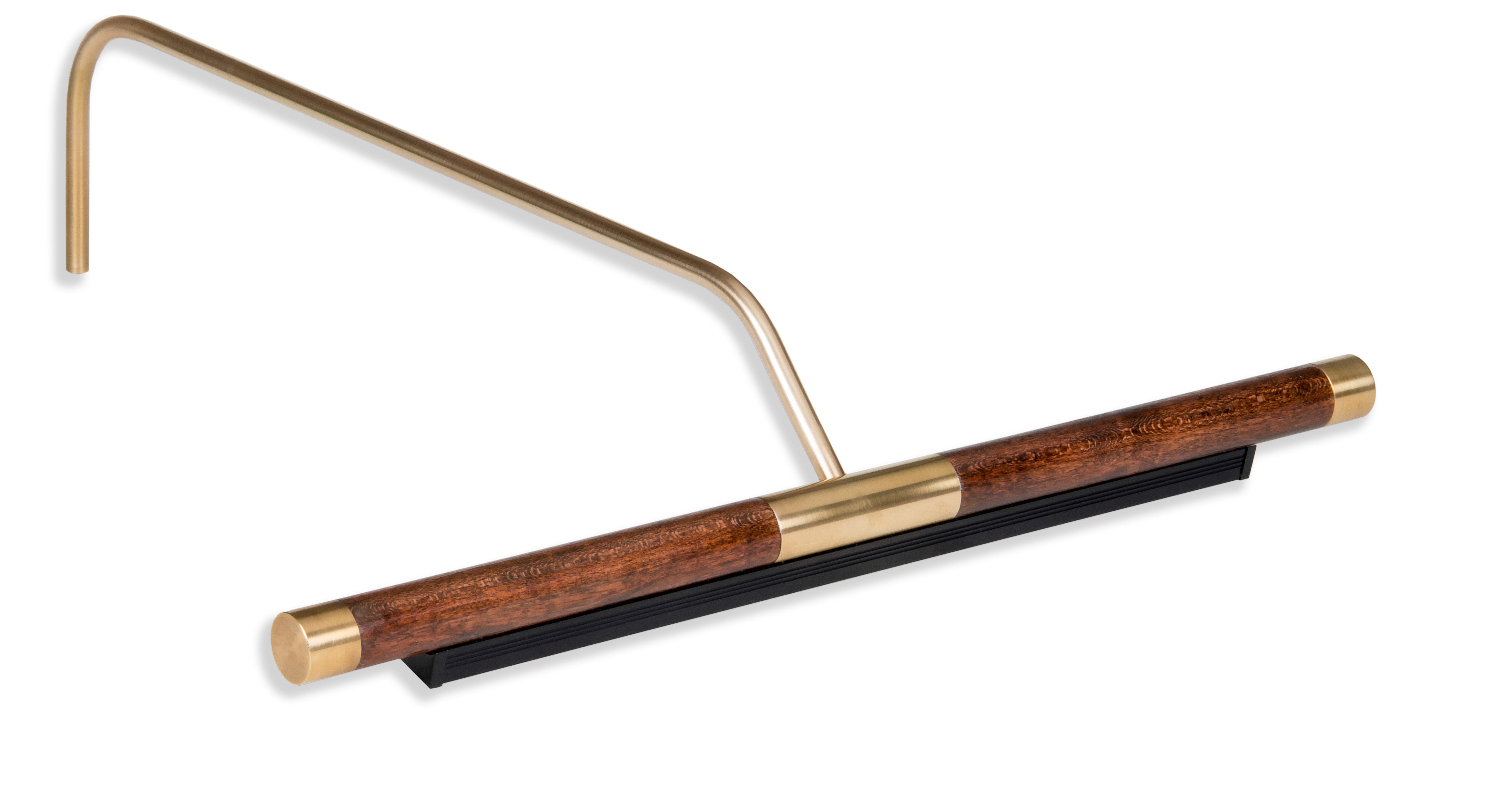
A picture light bar with a narrower optical beam angle concentrates output in a tighter vertical band. On a wide piece, this produces a bright horizontal stripe across the upper portion of the canvas with rapid falloff toward the lower edge. The solution is not simply to use a wider beam, which reduces directionality and flattens texture. The correct solution is a longer bar. A longer bar with a well-designed narrow optic distributes light across the full width of the work while maintaining the beam geometry needed to carry illumination down the full height of a tall canvas. This is why bar length recommendations scale with canvas width, typically targeting 65-100% of the artwork’s horizontal dimension, and why a longer bar is specifically suited to works with significant vertical dimension.
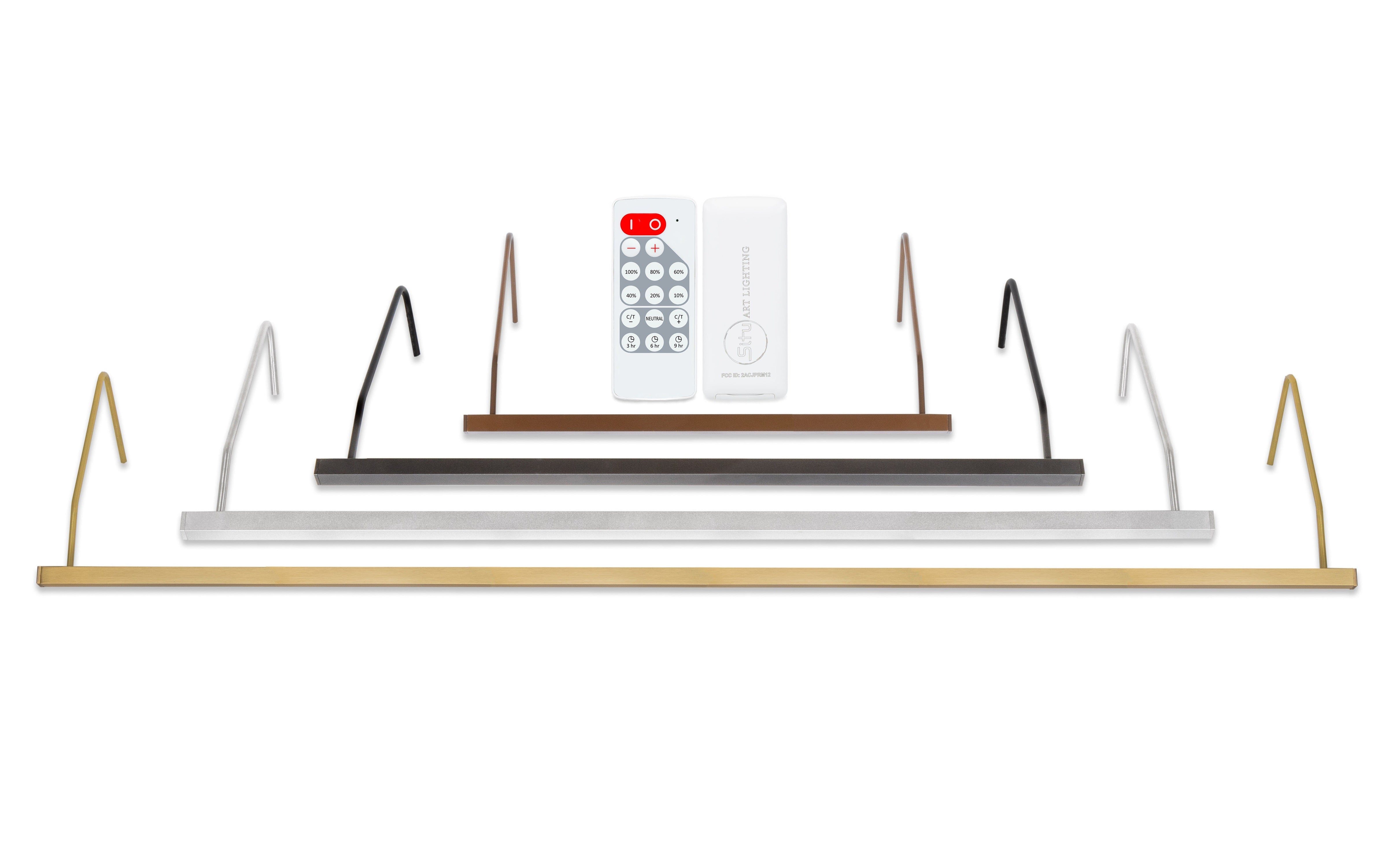
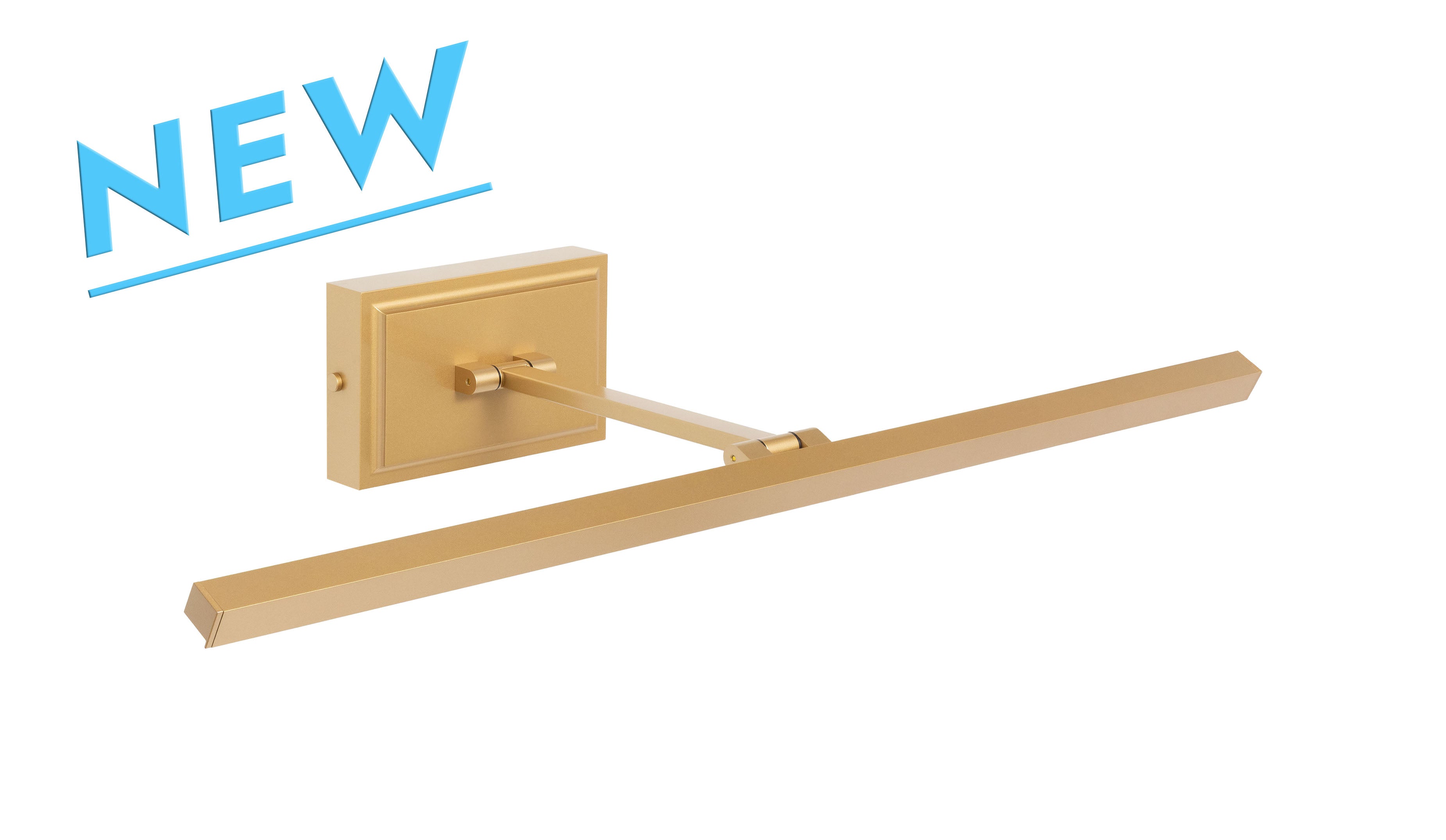
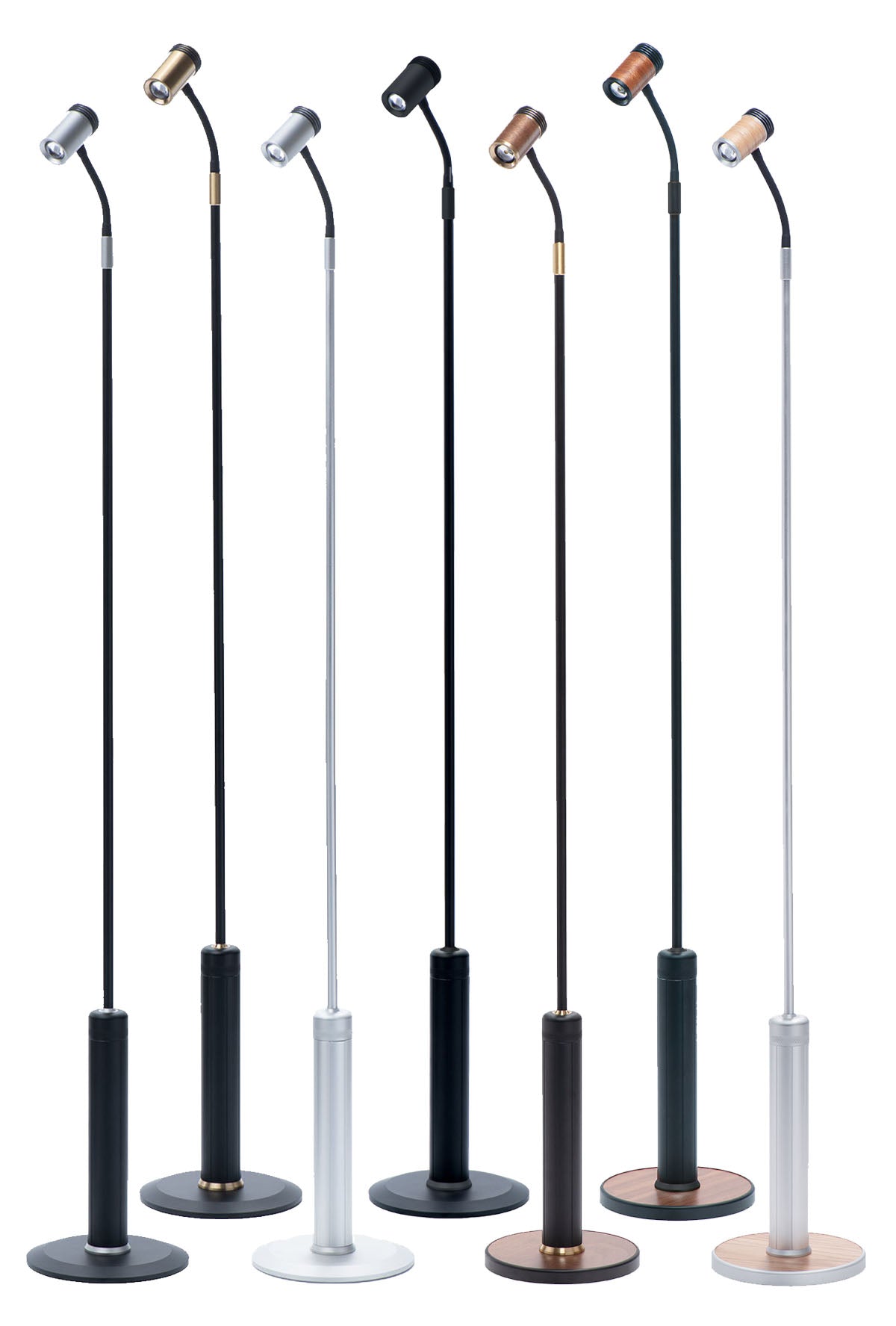
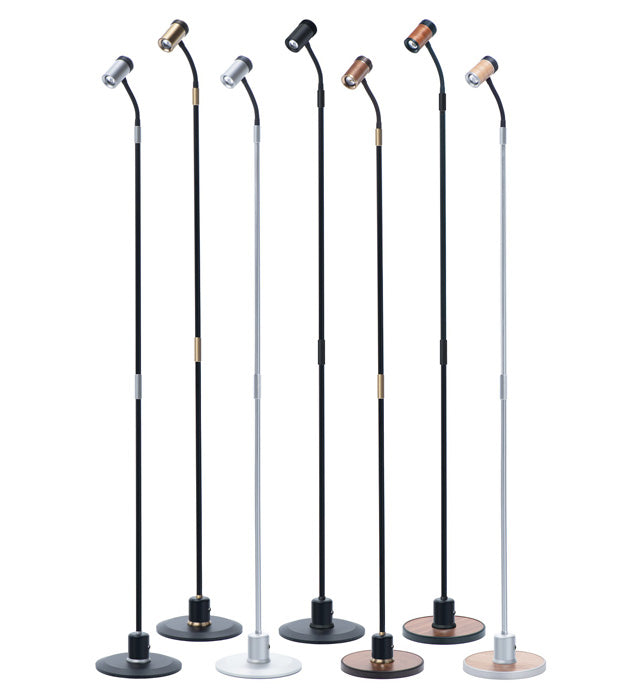
Our fixtures incorporate purpose-engineered optical systems that go beyond what a standard linear LED bar can achieve. Rather than relying on reflector geometry alone, we use precision optics that control beam shape in both axes, producing coverage patterns that traditional bar-style picture lights cannot replicate. This allows our fixtures to illuminate tall and large-format works with a degree of evenness and reach that collectors and designers working with significant pieces will notice immediately. Finish selection matters as well, though it is secondary to performance.
Wired and Wireless Options Both Work for Large-Scale Art
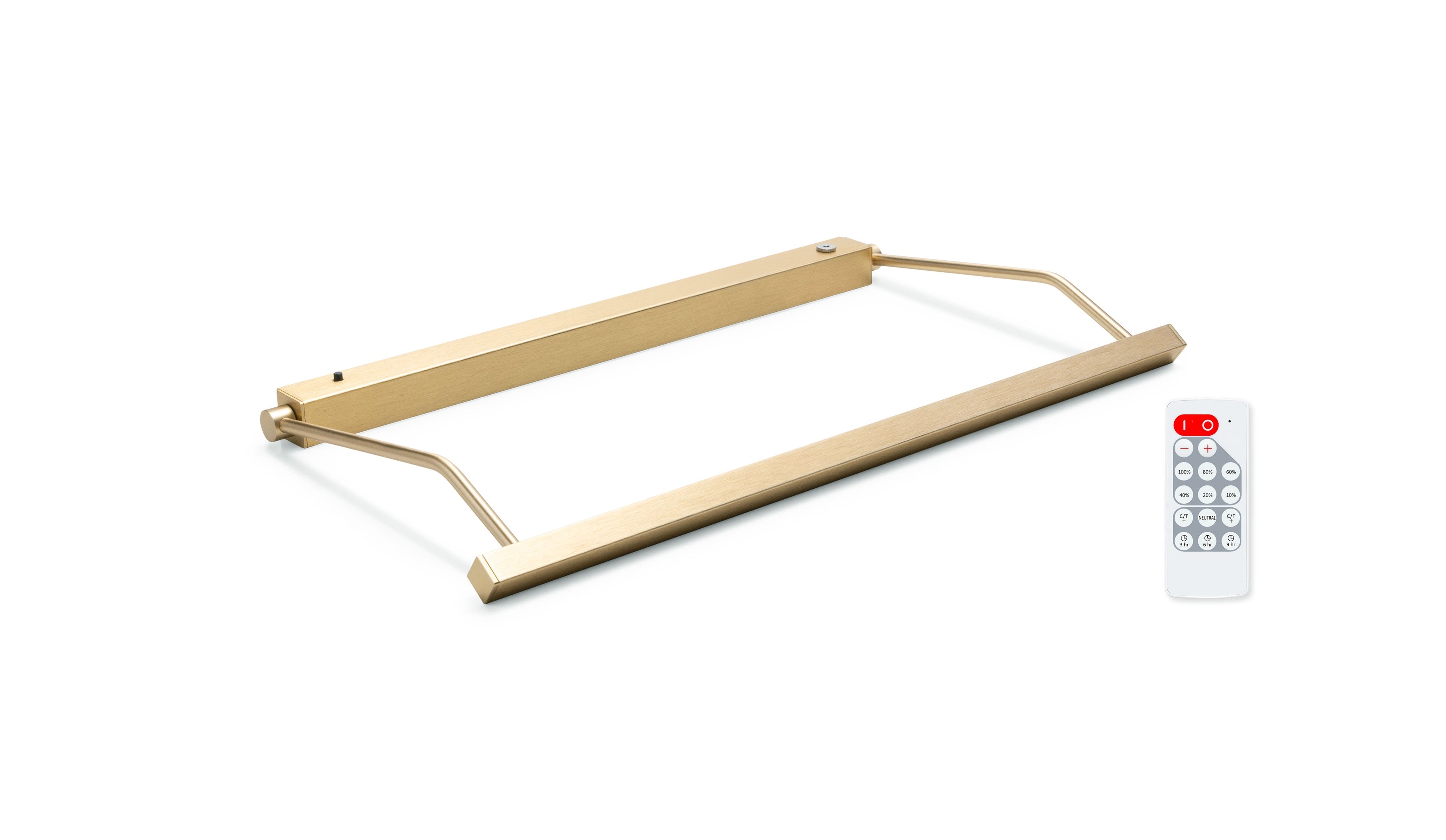
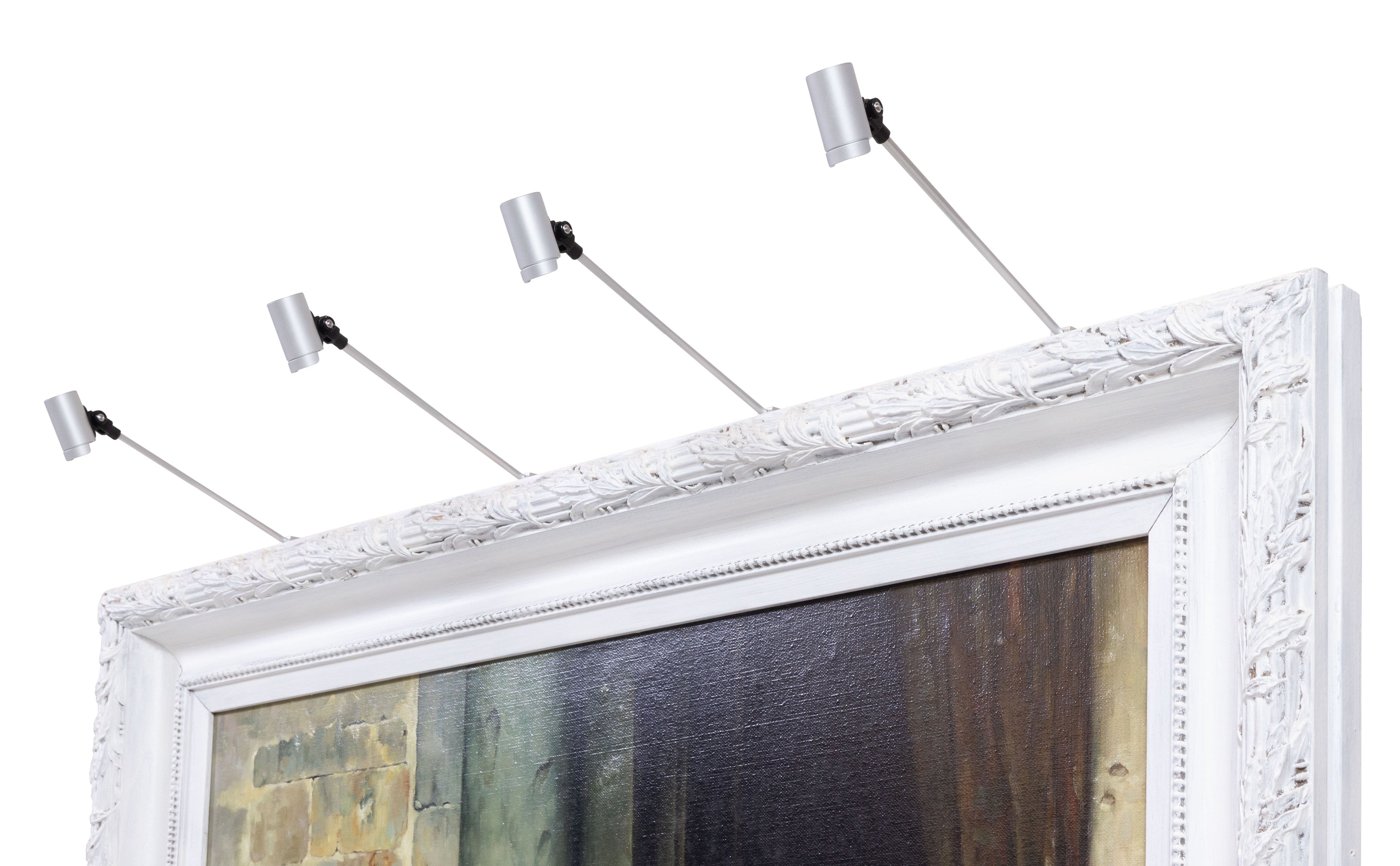
Wireless picture lights are genuinely better suited to smaller works in most contexts. Battery capacity, output, and bar length all scale with the demands of the canvas, and for compact to mid-size pieces a rechargeable fixture is often the most practical and elegant solution. Where large or oversized artwork is concerned, our 29-inch Rechargeable Vision Series changes the equation. Designed specifically for larger canvases, these fixtures can be deployed side by side across wide works, delivering the coverage and output of a purpose-built large-format solution while retaining all the installation flexibility of a wireless system. For collectors who prioritize the ability to reposition, rotate, or avoid wall penetration entirely, it is a genuinely viable option at scale. Where permanent installation is appropriate, our wired fixtures remain the more straightforward choice.
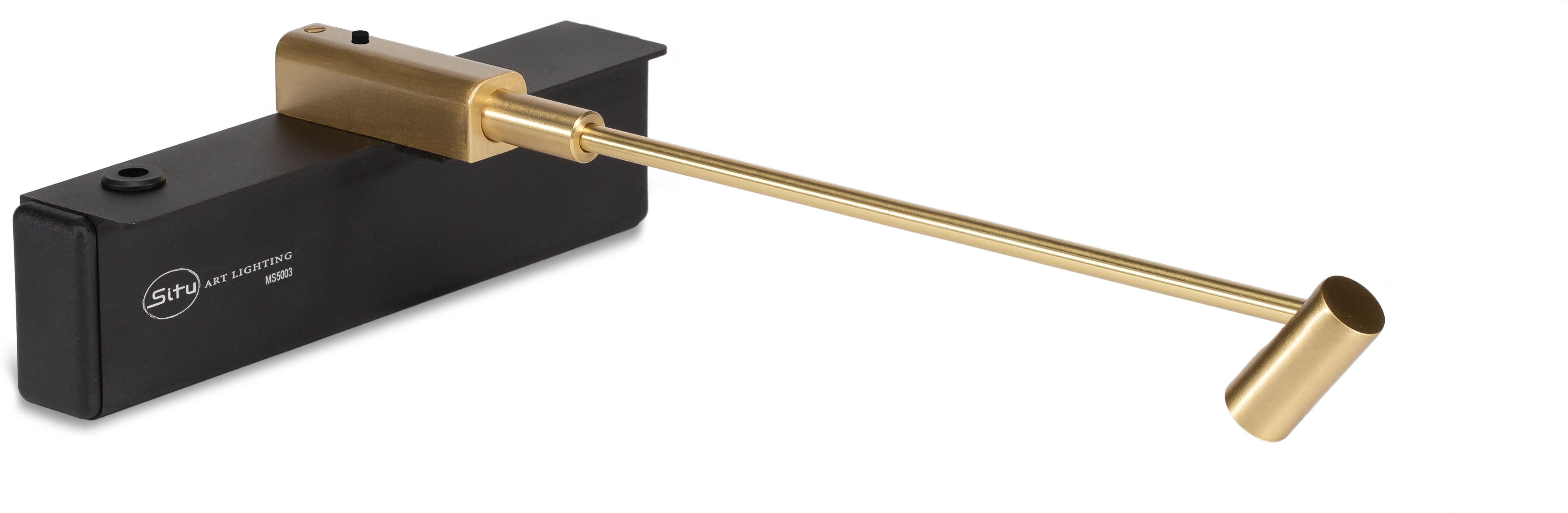
Wired fixtures offer continuous power and are the right choice when the installation is permanent, the wall allows for wire management, and the collector does not anticipate moving the piece. Wireless fixtures offer meaningful advantages in spaces where running wire is impractical or where the collection changes regularly. Our rechargeable wireless fixtures for large works are built with battery capacity and optical efficiency that deliver sustained output across full-size canvases, and the one-hand, no-tools removal makes recharging genuinely effortless even at scale. For collectors who rotate works across multiple walls or spaces, this flexibility matters considerably.
Ceiling-mounted track systems are worth acknowledging as a separate category. They offer broad coverage flexibility and work particularly well for triptychs, panoramic works, or installations that span significant wall sections. Where they fall short relative to dedicated picture lighting is in the directional intimacy and proximity to the canvas surface that a properly specified picture light provides. For most collectors working with individual large-format works, a well-selected picture light remains the more resolved solution. Many customers also prefer the architectural simplicity of a picture light as opposed to additional items mounted to the ceiling.
Color Temperature and CRI Are Not the Same Conversation
Color temperature and color rendering index are related but distinct, and both matter significantly for large-scale artwork. Color temperature, measured in Kelvin, describes the warmth or coolness of the light source. A 2700K source produces a warm, incandescent-like quality that complements oil paintings, works with rich earth tones, and traditional interiors. A 3000K source reads as slightly cleaner and more neutral, a more universal match to artwork and interior spaces. Sources above 4000K lack strong color rendering, tend to flatten the tonal complexity of traditional painting, and are better suited to contemporary photography and graphic work.
CRI measures how accurately a light source renders the full spectrum of colors relative to a reference illuminant. A source at 80 CRI will distort some colors in ways that may not be immediately obvious but become apparent when the work is seen under natural light. A source at 93 CRI or above renders color with a fidelity that allows the full chromatic range of the work to be seen as the artist intended. For serious collectors, this is not a minor point. It is the difference between seeing the painting and seeing an approximation of it.
Consistency across the room also matters. A picture light running at 2700K beside overhead fixtures at 4000K will make the artwork look well-lit in isolation while the broader space feels incoherent. A unified approach to color temperature throughout the environment allows the work to feel integrated rather than staged.
Picture Lighting Works Best When It Isn’t Working Alone
A dedicated picture light will illuminate the work, but the surrounding wall will appear comparatively dark at full scale, which can make even a beautifully lit canvas feel isolated rather than integrated into the space. Pairing the picture light with calibrated ambient lighting at a similar or matching color temperature produces a more resolved result and makes the artwork feel like a considered element of the room rather than a lit object within it.
The specific layering approach depends on the medium. Heavily textured oil paintings with significant impasto benefit from the directional quality that a well-positioned picture light already provides. Flat photographic prints behind glass require carefully controlled frontal illumination to avoid specular reflection from multiple angles, and the proximity of a picture light to the canvas surface gives it an inherent advantage over ceiling sources in managing that reflection geometry. Three-dimensional works and assemblages introduce additional considerations because the shadows they cast are part of the visual experience, and those shadows behave very differently under a close-mounted picture light than under a distant overhead source.
Dimming Serves Both the Experience and the Work
Dimmable picture lighting is standard practice in serious installations, and for good reason. The appropriate illuminance level for a large work varies meaningfully depending on ambient conditions, time of day, and the occasion. A canvas that reads beautifully at full output during an afternoon viewing may feel harsh and overlit during an evening gathering. The ability to reduce output by 20 to 30 percent shifts the same room from gallery to salon without any physical change to the installation.
From a conservation standpoint, dimming reduces cumulative light exposure over time, which matters particularly for works displayed continuously. Maintaining lower output during periods of low occupancy adds meaningful longevity to sensitive works without compromising the viewing experience when the room is in use.
When the Work Matters, Get the Lighting Right
Large-scale artwork represents a meaningful investment, and in most cases the cost of purpose-built picture lighting is modest relative to the value of the work it is illuminating. The more important calculation is what poor lighting costs: flattened color, obscured texture, visual incoherence with the surrounding space, and in cases of sustained UV exposure, irreversible physical damage to the work itself.
If you are working through these decisions for a specific piece and would benefit from a specialist’s perspective, we are here to help. Share the work with us and we’ll help you identify the right picture lighting solution for your space, your medium, and your installation. Thousands of collectors, designers, and institutions trust us to get it right.